Are CFL light bulbs practical and safe?

A few days ago I wrote an off-topic post complaining “green” builders are not using CFL lights. I got a number of responses, including one from a homebuilder association that defines the TX Green certification explaining CFLs have mercury in them which creates a number of concerns: environmental, breakage and  disposal, in addition to additional cost.  When I got these responses I felt like and idiot for writing about the issue if there is a good reason why CFLs are not used. But then, I spent some time doing research and arrived at a different conclusion. There are easy ways to deal with every one of the potential issues.
 
First, the good news. Incandescent bulbs are being banned in the EU.
 
Why is this important? For our a small subdivision like the one where we live with 200 Homes,  replacing 70 light bulbs per home (the number I replaced) would mean 14,000  CFL light bulbs replace the same number of incandescent bulbs, resulting in  over half a  million dollar in electricity cost savings, preventing over 1.5 million  pounds of coal from burning and a reduction in 6.3 million pounds of  greenhouse gases PER YEAR. 
Now let’s look at the key concerns from the builder:
 
1. Mercury in CFLs
 

Manufacturer investments in technology over the last two  decades have reduced the amount of mercury used in lamps by nearly 95%. The National Electrical Manufacturers  Association (nema.org) has established a maximum of 5 mgs of Mercury per light bulb, but many of the latest modern have as little as 1.23 milligrams. According to the EPA, a 13 watt CFL over 8,000 hours of use  could result in 1.8 mg of Mercury emissions versus 5.8 mgs for an incandescent.  The CFL results in almost three times less mercury emitted to the environment. “CFLs  result in less mercury in the environment compared to traditional light bulbs“  (5)  EPA adds: “Because CFLs also help to reduce greenhouse  gasses, other pollutants associated with electricity production, and landfill  waste (because the bulbs last longer), they are clearly the environmental  winner when compared to traditional incandescent light bulbs.” 


  2. Dealing with broken CFLs.  


If a CFL containing the maximum allowable, 5 mg of mercury,  breaks in the average bedroom with a volume of about 25 cubic meters, assuming all the  mercury vaporizes immediately (an unlikely occurrence), would result in an  airborne mercury concentration of 0.2 mg/m3. This concentration will decrease with time, as air in the room leaves and is replaced by air from outside or  from a different room, likely approaching zero after about an hour or so.  This level and duration of mercury exposure  is not likely to be dangerous, as it is lower than the US Occupational Safety  and Health Administration (OSHA) standard of 0.05 mg/m3 of metallic mercury  vapor averaged over eight hours. (3)  


3. Disposal of broken CFLs  


CFLs can be disposed of on any CFL Disposal station. IKEA, Home Depot, Ace Hardware  and other stores offer CFL  drop-off stations.  In Austin, businesses can drop off CFLs at the City of  Austin HHW Collection Facility, . Additional locations throughout Texas found at http://www.tceq.state.tx.us/assistance/hhw/contacts.html  Individuals can bring up to 5 gallons of waste for free. Commercial recycling for CFL light bulbs is quite inexpensive. Here in  Texas, Waste Management will recycle 125 light bulbs for under $0.72 each. (10). There are a number of commercial recycling businesses.  


The law in Texas allows businesses to collect their CFLs for  up to a year prior to disposal or recycling. (11). So if a CFL breaks during construction, it can simply be stored in a closed leak-free bag inside a properly labeled container like a trash can in a central location. The builder could store all broken light bulbs for up to a year then send them to the HHW collection facility (an 8 minute drive from our subdivision). Alternatively, if two light bulbs are broken per house, every 75 homes built the builder would spend $120 (shipping included) sending all these light bulbs to a commercial recycling location.  


4. Cost 

Come on, $100 cost per home is more important than saving a million dollars, 6.4 tons of green house emissions and half a million pounds of coal burned? If that’s the case then it would prove that builders are only saying they are “green” as an advertising scheme to sell homes not because they really care about the world. Here is how you could deal with the cost: 

 a) You could apply part (3% to be exact) of the $3,000 “Green” rebate from the City of Austin to pay for the CFLs 

 b) You could give your customers the option to pay for them – I would gladly have paid $100 plus, let’s say $10 for disposal of any broken CFLs, and I would have volunteered to take any broken bulbs from my house to the disposal center. 

 c) You could increase the price of the homes by $100. As a customer, adding $100 would not have made any difference for the average cost new home. If the salesperson would have quoted a price $100 higher at the beginning no one would notice.  

 d) You could increase the price of the house by $200. The only reason the builder had an “EcoGreen” sign outside of the home, the only reason they were promoting their certification and the only reason they had EcoGreen brochures along with the home builder brochures is because thy feel it would be a differentiator that will help them sell more homes. They didn’t do it to brag about how much they love the environment. Builders could increase the price of their homes by $200 or $500 and promote “The only builder with all CFL lighting in Texas”. For a LOT of people , this would be a very good incentive to do business with this particular homebuilder. I know because I asked many of my neighbors. Builder would be doing the right thing and making more money. 

 e) Builders could eat the $100, if they really care about the planet we live in and the plane you are leaving for your children.


 f) Builders could do a combination of all the above. Part of the money comes from the rebate, a part from the customer, a part from the rebate, a part from their profits, and still enjoy the marketing benefits of being really green.  

In conclusion: there is no good reason why builder should not stop using incandescent bulbs right away and start using more CFLs. Now if you want to go green all the way and have some extra coin, another option is LED lights which are mercury-free and even more efficient than CFLs, but cost about $50 a piece. 

Have you replaced your light bubls yet?


CFL Benefits
Each CFL can $30 in electric costs, Prevent 110 pounds of coal from  being burned and  Reduce greenhouse gas  emissions by 450 pounds (1) Lighting accounts for 38 % of residential energy consumption  (2) CFLs produce about 70% less heat than standard incandescent  bulbs, so they’re safer to operate and can help cut energy costs associated  with home cooling.
(4)  EPA’s statement “Switching from traditional light bulbs  (called incandescent) to CFLs is an effective, simple change everyone in  America can make right now. If every home in America replaced just one  incandescent light bulb with an ENERGY STAR qualified CFL, in one year it would  save enough energy to light more than 3 million homes. That would prevent the  release of greenhouse gas
emissions equal to that of about 800,000 cars. 
“ Sources and resources: 

(1)    MSNBC http://www.msnbc.msn.com/id/17831334/  
(2)    Energy Information Administration, 2003 Commercial Buildings  Energy Consumption Survey
(3)    http://www.treehugger.com/files/2007/05/ask_treehugger_14.php 
(4)    GE Lighting  http://www.gelighting.com/na/home_lighting/ask_us/faq_compact.htm#epa_recommend 
(5)    EPA’s CFL FAQs  http://www.gelighting.com/na/home_lighting/ask_us/downloads/FAQsAboutCFLs.pdf 
(6)    TCEQ http://www.tceq.state.tx.us/comm_exec/forms_pubs/pubs/rg/rg-377.html 
(7)    www.Earth911.com  
(8)    Recycling guidance to businesses  http://www.epa.gov/epawaste/hazard/wastetypes/universal/lamps/recycle.htm 
(9)    NEMA www.lamprecycle.org 
(10) Waste Management Lamp  Tracker  https://www.wmlamptracker.com/v2/lamptracker_compact.cfm 
(11) Texas Regulatory  Guidance RG-377 January 2007
(12) GE Lamp recycling  information page  http://www.geconsumerandindustrial.com/environmentalinfo/regulations_resources/recycling_information.htm
(13) Incandescent Bulbs are banned in the EU http://earth911.com/news/2009/09/03/incandescent-bans-initated-in-europe-set-for-u-s/ 


The 10 Rules of Customer Centricity

I was reading Bruce Temkin’s report, The 6 laws of customer experience, which has a number of similarities with an article I wrote for 1 to 1 Magazine published in January, so I decided to post the full article here: 

The 10 Rules of Customer Centricity

Build long-term relationships and business success by acting in the customer’s best interest.

Many companies claim customer centricity in their list of company values, in their organizational tenets, or in their mission statement. Being customer centric is not easy. Use these 10 rules to assess your organization’s customer centricity:

1. Co-create with customers. Involve customers in the design, test, and ongoing improvement of your products with tools like advisory boards, customer design meetings, and beta programs. Don’t focus on features and specs; instead focus on how you are helping customers get a specific job done. At Threadless, for example, customers design, vote on, and order shirts before they are produced. Starbucks captures customer ideas and feedback via StarbucksIdeas.com.

2. Incent your sales team to be customer centric.  Most sales teams get bonuses based on quarterly or monthly sales and profitability, yet satisfaction and loyalty are the leading indicators for future profitability and long-term success. At leading companies, customer satisfaction is measured twice a year and the results directly impact executive compensation.

3. Empower front-line employees. Ritz-Carlton hotel employees at all levels are empowered to spend up to $2,000 per guest to do whatever needs to be done to make customers happy.

4. Happy employees = happy customers. Simple, but true. A company that values employees is a company where people enjoy working and, therefore, they do a good job.

5. Your customers are not assets, they are your reason to be.  Peter Drucker said the purpose of the organization is to create a customer. The relationship you build with customers is, therefore, the foundation for success. Are you trying to extract as much money from customers or are you building relationships? Are you charging “convenience fees” that generate what Fred Reicheld calls bad profits like car rental companies that charge outrageous prices for gas? Kimpton Hotels’ loyalty program members are delightfully surprised by getting $10 worth of mini-bar items for free.

6. Contact Us. Really. Go to your website and measure how long it takes you to find your organization’s contact information: a real email and phone number. Pretend to be a customer to learn your response times via email and your toll-free number. At customer-centric companies people answer the phone within seconds, executives answer customer calls directly, and they publish names, phone numbers, and email addresses on their site.

7. Listen to customers proactively.  You can do this the old-fashion way via customer service reports that feed product development, customer surveys, and other tools. Today companies are also required to listen – and respond – to the social web: Twitter, blogs, Facebook, etc. Beyond listening, you must empower people to respond and to fix problems. Do you have the processes to capture, organize, prioritize, and act on what you are hearing?

8. Focus on the customer experience. Get in your customer’s shoes. Pretend to be a customer to understand their end-to-end experience and what goes on in their mind at each step. Executives at a courier company went through the experience of actually shipping a product and tracking it to delivery. Software product managers go to customer’s homes to witness their experience from installing to using to troubleshooting the product.

9. Customer orientation. This means putting the customers’ needs first. The customer is not always right, but you really need to focus on making them happy. I owned a computer store in the 1980s. A customer walked in ready to buy a new computer because the old one was very slow. I suggested buying more memory, which solved the problem. The customer was blown away that I offered an inexpensive product when he was ready to buy a new computer. Not only was he my customer for life, buying multiple computers and accessories, he also referred lots of business to me and we became great friends.

10. Make money from your customers. Making money from customers is OK. They will gladly give their money to a company they value. Ritz Carlton estimates customer lifetime value at over $1 million – what is yours? An unhappy customer will probably tell a dozen people about their bad experience. Acquiring a new customer usually costs $300 or more. It is a better business proposition to keep your customers happy and make money from them over time by building a long-term relationship, not a transactional one that ends at the cash register.

Truly embracing customer centricity requires transforming the organization. The book The Discipline of Market Leaders suggests that organizations align behind one of three core disciplines: operational excellence (think McDonald’s), product leadership (think Apple) or customer intimacy (think Nordstrom). The “chosen” discipline defines the company strategy and culture and therefore the chances for success. Embracing customer centricity presents an incredible opportunity for differentiation, becoming a source for competitive advantage.

Green builders don’t act so green

Eco Smart enegry smart homes


 This is a transcript from an email tip I sent to the Consumerist 

We built a new home in Texas about two years ago. The builder told us it was an “Eco smart” house and that it was  “Green Built TX” certified.  They had yard signs and brochures to explain how green the builder is. We were shocked to find out most of the light bulbs in out house were incandescent.  Isn’t replacing bulbs with CFLs the simplest, most basic way to save energy?

 Our bathrooms, for example, have a lighting fixture with six lights, which means every minute the light is on, those six lights are consuming 360 watts. I replaced all six lights with 9w CFLs, now consuming 54 watts total – almost 7 times less energy. The CFL light bulbs are only about $1.50 at Home Depot or WalMart, I am sure the builder can get a better deal. I had to replace over 70 light bulbs in our house (picture of old light bulbs attached). I probably spent $150 total, a number that is absolutely insignificant relative the price we paid for the house.  

The kitchen area, for example has 4 light bulbs, all controlled by a single switch, consuming 240 watts instead of 52 watts now with 13w CFLs. Every home in the neighborhood has an outdoor light outside of the garage with an average of three 60-watt light bulbs that are usually left on overnight. That’s 18,000 watts consumed for every 100 homes. All night long. Just for outdoor lights.
 
What is worse, is that we threw away over 70 perfectly good incandescent light bulbs that I paid for (when I bought the house), which are by now in some landfill. In addition, I had to go through the inconvenience of buying and replacing 70 light bulbs, not including some I have not been able to change because they are too high and I cannot reach them with a normal sized ladder.
 
I called the builder, who told me the “certification” does not require all light bulbs to be CFL, just a certain percentage. The builder probably installs enough CFLs to meet the minimum requirement to be certified.
 
Lightbulbs


Selling “green” homes with incandescent light bulbs is deceptive and misleading. Building new homes that consume so much additional electricity to save $100 is absolutely irresponsible in this age. At the very least I would have liked to have the option to pay $100 for the upgrade, which would save thousands of dollars over a few years in energy cost and is the right thing to do.
 
I suggest selling new homes with incandescent light bulbs should be illegal.
 
My other idea is to offer homes with solar-powered A/C units. After all, most of the time you need the A/C running in Texas there is plenty of sun shining. It would be much more affordable than full solar systems which require many more panels plus a battery…but that’s a subject for another post. Maybe.
 

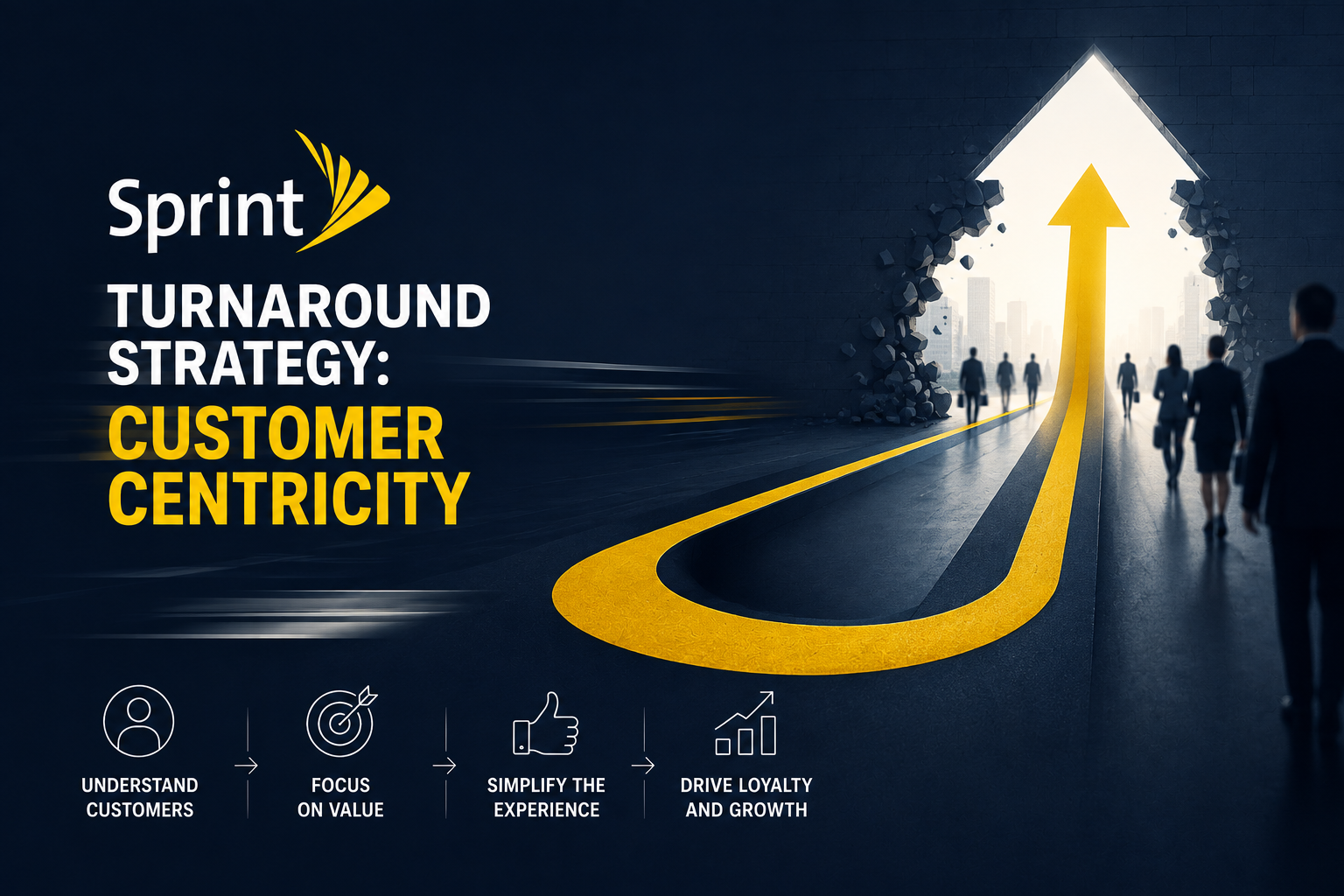
Sprint’s Turnaround Strategy: Customer Centricity

This is a cross post from the Bazaarblog. 

Traditionally, companies have focused on these key areas: sales, finance and operations. This is natural because they provide real, solid, measurable numbers: you can quantify cost savings from operations and you can measure sales in very specific ways (by region, by product, by sales rep). These are the metrics that count, right?

 Sales and operations are not the only important measurables. They’re like the engine room of a ship. It’s important to make sure the engine runs smoothly, but how important is this if you are headed in the wrong direction, or toward an iceberg?  I think Peter Drucker summarized perfectly “Because the purpose of business is to create a customer, the business enterprise has two–and only two–basic functions: marketing and innovation. Marketing and innovation produce results; all the rest are costs. Marketing is the distinguishing, unique function of the business.”


 Marketing can be the internal champion for a new customer-centric focus. Dan Hesse, CEO of Sprint, took the stage at the Forrester Customer Experience Forum in New York this week to talk about Sprint’s customer-centric approach. Imagine his outlook and options on his first day as CEO: In 2007 the company lost almost $30 billion dollars. In Q1 2008 alone the company lost over a million customers. 

 If Hesse was like most CEOs, he would have spent all his time in the engine room, believing this was the heart of the problem—the heart of any possible positive change. He would have been under enormous pressure to engage in broad cost-cutting and to focus almost exclusively on improving internal efficiencies and operations. And he probably did a fair amount of this type of work. But Dan’s number 1 priority was improving customer experience. He knew that making customers happy is a good strategy for long-term success. He refocused the entire company around three key initiatives: 

  1.  Customer Experience
  2. Build the Brand
  3. Conserve Cash

Every single Sprint resource was realigned around these three objectives.  During his talk, Hesse outlined his “magnificent seven” change-drivers: 

  1. Align compensation and rewards
  2. Knowing the agenda and knowing what the boss checks on
  3. Root-cause analysis/data
  4. Accountability
  5. Project leadership
  6. Simplify
  7. Living the brand

Instead of going on a cost-cutting spree and inflating prices, Dan chose to simplify Sprint’s product offerings, making them easier to understand, less expensive to customers, and ensuring a better overall customer experience.   

Our core problem is cost cutting that led to customer satisfaction problems”

The result? $2 billion in savings just from customer service operations. Simplicity and better customer experiences result in fewer, shorter calls to customer service. Sprint was recognized by Forrester by having the highest improvement in customer experience across all industries by earning a 15-point jump. They were recognized as #1 in customer satisfaction for mobile, and J.D. Power recognized Sprint with a 17-point improvement.

The effect on earnings? In Q1 2010 the company reported their first profit (EBITDA) in a long time, the best improvement in net post-paid customers in five years and the first sequential increase in net revenues in three years. Sprint is not at the finish line, but is clearly getting there. 

Hesse understands the value of satisfied customers and the power of word of mouth: 

In terms of how much will it influence customer purchase behavior, a TV ad would probably be a 1. A really good TV ad is probably a 2. Someone you know telling you about a product they like is a 9 or 10.”


The Criticality of Company Culture

Courtesy Andreas Nilsson

Last month 1 to 1 magazine published my article “The 10 rules of Customer Centricity” that talked about how customer centricity needs to be a company strategy, not a motto for the marketing team.  My last post about Why I joined Bazaarvoice talks about the Bazaarvoice culture and how it was a key factor for me to join this company. Again, culture should not be something that is done by HR, framed and then ignored – its central to a company’s strategy.

The book The Discipline of Market Leaders is one of my favorite books on strategy, I encourage you to read it. It makes the case for three central disciplines that define a company and its primary operating model and its product strategy. The book talks about three main disciplines: Customer intimacy (think Nordstrom), Product Leadership (think Apple) and Operational Excellence (think Dell or McDonald’s). Companies can’t do all three, they need to pick one and run with it.

Culture = Strategy

Company culture is strategy. It defines your company. It defines who you hire. It defines what you value and reward as an organization. It defines how you create products and services. It defines who you are. It determines your success.

The Engineering Culture at Motorola

Motorola has been for many years one of the most innovative companies in the planet. While I was working there I had the opportunity to visit the Motorola Museum. I was amazed about the number of firsts: From the first car radio (did you know this is the origin of the name -as in Moto- Rola?), the first square TV to almost everything RF/radio related in the world including the system that provided communication to the Apollo XI Lunar Lander.

Then it hit me: Motorola had invented so many markets yet it had been unsuccessful in maintaining market leadership. The company invented the cell phone and by then it had secondary market positions both on the cell phone business as in the infrastructure side. The answer, for me, was the company culture.

An interesting fact: Motorola employees wore badges of different colors based on the number of patents under each employee’s belt.  Engineers worked with pride with a silver or golden ID badge.  People knew you had to be an engineer to be successful at the company.  There were POPI (protecting our proprietary information) audits at every office ensuring nothing as trivial as an org chart or was left at your desk.

As much as Motorola excelled at creating products, it failed at bringing them to market.  I saw tons of technologies that should have been successful like the Canopy broad-range internet access network. But most of these failed because marketing was not a core competency.  The engineering -centric culture is killing the company. I really hope it can transform itself quickly enough and be a leader again.

The Product/Launch Culture at Microsoft

My four years at Microsoft were some of the most amazing of my career. Ultimately, I decided to leave because of culture. Everyone knows Microsoft hires type-A personalities. Many people know there is a performance grading curve for employees and that the performance measurement is exclusively focused on the fiscal year at hand.

All these factors result in a culture where there is no room – especially in a company this size- for long-term planning or for learning and optimizing a project. It is all about launching new stuff. From my first few weeks I was surprised by the number of emails that announced new things – new products, new initiatives, new marketing campaigns. There was no discussion about monitoring, learning, optimizing. Projects need runway to mature and become successful.

Marketers received a plaque with over a dozen slots for adding badges for each product they launched. I was part of the Visual Studio 2005 launch team. After the product was launched in November 2005, many people left the team starting with the GM. After all, they had a successful product launch under their belt. It was time to get promoted and move to another group. A former boss and one of the people I admire is John Smolucha who shared an analogy about the Columbia shuttle launching and immediately everyone in Houston command center going home.  How would you feel if you were an astronaut?  “Houston?….Houston?… we have a problem.” . This is how many projects felt at Microsoft.

A great example of this culture is Bing. Microsoft search engine became MSN Search which became Live Search and is now Bing Search – all over just a few years. Maybe next year a new GM will come on board and will re-launch it as something different.

The Culture at Bazaarvoice

It just makes sense: if you focus on making your employees happy, you will be able to attract (and retain) the best talent and everyone will be motivated to do their best job. Customer service experts know happy employees translate to happy customers. The rule applies equally to every area in the organization.

This is how Bazaarvoice defines its culture (from the website):  “To us, culture is more than perks and free sodas. It’s the way we work with each other and create a place where people want to work every day, have the opportunity to rapidly innovate, and foster an environment that brings out our best.”.  There are many blog posts about culture for you in the Bazaarblog.

In Brett’s words, “The importance of focusing on culture is greater than ever.  I spend around 15% of my time focused on culture, and I believe it is largely responsible for our success as a company.”

As I was finishing this post, I read Behind the Cloud, Marc Benioff’s book about building Salesforce.com which reinforces this idea:  “My summers at Apple had taught me that the secret to encouraging creativity and producing the best possible product was to keep  people fulfilled and happy. I wanted the people who built salesforce.com to be inspired and feel valued. “ (Page 11).

Kip Tindell, CEO of The Container Store, recently said in an interview ” It was Milton Friedman who said, “the only reason a corporation exists is to maximize return for the shareholders.” Well, no. Not really. We actually put the employee first. We don’t even put the customer first. Now, you know we love our customers. But we put our employees first. We believe that if you put the employee first and take better care of them than anybody else, they will take care of the customer better than anybody else. And if those two are happy, if you have the happiest employees and customers around, ultimately your shareholders are very, very happy as well.”

I’ll end this post by summarizing on one point: Culture is not a task for HR or for a marketing VP. It must come down from the top and lived by everyone in the organization:  your culture is your strategy.

Joining Bazaarvoice

BV Logo

It’s been almost three months since I joined Bazaarvoice as Sr. Director for Product Marketing. It has been a very rewarding and fun experience. But let me start from the beginning:

I worked for Vignette in a similar role for about a year and a half. Then the company was acquired by Open Text and I was offered a position to run strategic communications, which I did for a few months. My team included PR, AR, social media and a new CXO/executive relationship program.

This was a very exciting position from the perspective that it was all about influencer marketing. However, I had significant differences of opinion with the senior management team in terms of strategy, company culture and marketing position. Once I started working on that position I felt like I was an evangelist for a religion I did not believe in. Almost at the same time, Bazaarvoice presented me with a unique opportunity.

My Social Media background

For the last almost 10 years I have been working with social media and online communities. At Motorola we created the first mobile developer communities back in 2001 for the earliest smart phones. Developers have relied on peer-based online and offline communities for learning and support. Then I had the unique opportunity to lead Microsoft’s community strategy starting in the developer division and as the driver for the Broad Customer Connection initiative company-wide. Looking back, we did some pretty amazing stuff back then that would still be considered leading edge today.

During my time at Vignette, I helped the company transition from Enterprise-content management to a vendor that uniquely understood how to manage both enterprise content and social media content. The Vignette social media strategy was looking good until the acquisition.

Four Areas of Social Media

I see four discrete aspects of social media as they relate to how companies interact with it.

  1. First there is the Social Web made mainly of social networking sites: Facebook, Twitter, Linked In, Flickr, eVite, eBay, Slideshare – etc. There are many case studies about how companies are using these tools to connect, listen, respond, interact with customers. I have a pretty cool story I will share in a future blog post.
  2. Peer support communities proved their value many years ago. This includes developer communities, support forums, NIkeID and others that are mainly knowledge based or break-fix.
  3. Social media in the enterprise, better known as Enterprise 2.0 took the concepts of social media and Web 2.0 into employee Facebook-like applications converging with collaboration and knowledge management. SharePoint and Salesforce Chatter have a good chance of dominating this market.
  4. Standalone marketing community sites. Often times these appear as complements to brand sites, as promotional micro sites or as standalone sites that aim to capture a conversation, increase engagement and somehow magically produce business results. I feel like this is the least mature aspect of social media. This is the space where I will focus the rest of this post.

Build it and They Will Come

The initial idea was great. Essentially marketers love the idea of being the center of attention, of hosting the conversations around their brand and their market. If your business is selling guitars online it would be very compelling to be the Facebook of musicians and host the space where they would gather and chat about stuff, giving you “permission” (in Seth Godin’s terms) to market to them and turn them into buyers.

The problem: Facebook won. Music aficionados are on Facebook. They are probably also fans of organic food, classic rock, the Gap, etc. But they don’t think about these brands when they want to discuss topics related to these markets (food, music, clothing) because their conversation is happening on the social web, where their friends are today. In Jeremiah Owyang’s words “fish where the fish are”. 

Think about it from your perspective: how many things are you passionate about, how many brands you like. Do you maintain a profile in each of these brand’s communities? Are you active there? Or do you do all your social webbing on Facebook and twitter?

The idea sounds great but it’s a myriad. I recently blogged about this in what I think is a controversial post that includes some informal research about the failure of online marketing communities.

Where’s the beef?

For the last two years companies have been hiring social media experts. Many of them are good communicators, experts in the use of social media tools but lack the track record of driving real business results. Companies realized they needed to do something in social media and given their lack of experience CMOs had to trust social media experts and give them free reign to do whatever they wanted. They wanted a social media strategy.

Last year companies started asking themselves, after doing this for a few months, Where is the ROI? How much should we invest next year in social media? How do we know what tools to use? Facebook fans don’t make payroll. Business week published an article “Beware of Social Media Snake Oil” based on ideas from David Armano. A year ago, my presentation at Web 2.0 focused on the lack of measurement and idea that you don’t need a social media strategy because social media is a tool that should support business objectives.

Some stats: (about a year old) . eMarketer found 84% of marketers don’t measure social media ROI at all. A survey I did with the Marketing Leadership Roundtable shows only 12% of Web 2.0 initiatives are rated as effective. The Marketing Sherpa Social Media benchmark shows social media has been most effective at influencing brand reputation and awareness, improving search engine rankings and increasing traffic. 

Social Media has produced soft benefits: awareness, participation, customer feedback. There is no question Social Media is a great tool to interact with customers, listen, broadcast and solicit feedback. What about making real money?

Enter Social Commerce

Social commerce is the practice of leveraging customer interactions to drive real business value. It started by taking customer’s opinions to help other customers make decisions on what to buy: ratings & reviews. Today, ratings and reviews are one of the primary drivers of eCommerce sales. Think about the last time you bought something on Amazon. As soon as I land on a product page I scroll down past all the traditional marketing content to land directly on ratings and reviews.

Now social commerce leverages not only opinions – also knowledge (questions and answers), experiences (stories), the Social Web, mobile shopping and a number of innovative tools. The direct correlation to business results is proven: higher sales, lower costs, reduced returns. For more stats see www.bazaarvoice.com/stats . Furthermore, social commerce can help companies breathe customer oxygen to understand the voice of the customer and derive insights that transform every aspect of the organization.

The secret is in what I call contextually relevant community. It is about using social media in a way that is relevant to the user based on their intent (what they are trying to accomplish) and their desired experience (i.e. the websites where they go to accomplish this). Social Commerce makes relevant, trusted advice, opinions, knowledge and experiences available to people as they look for products, decide what to buy, or learn how to use a product.

The conversation is not about what you had for lunch last week or the pictures of your dog: it is about the relationship that exists between you and the brand: the products you like, the people that enjoy products like you , your knowledge about these products, experiences you have had with them. It is contextually relevant to the brand as well.

Why Bazaarvoice

Leaving a global, public company with hundreds of millions of dollars in sales, in a job where I was innovating how to work with influencers and had three directors reporting to me to a small startup in Austin was a difficult decision. There were tradeoffs and risks.

Today I am 100% confident I made the right decision. There is energy and passion at this company. I work with really bright people. Our executives are smart. Brett, CEO inspires me. I enjoy every day at work. My wife told me after two weeks I am a different person at home. She loves Bazaarvoice too.

It’s good to be part of a successful company. Today, Bazaarvoice serves over 600 of the leading brands globally, including over 50 of the top 100 retailers in the U.S. We are hiring as fast as we can. There are probably 80 open positions on our website today. We have close to 10 full-time recruiters. Our ability to grow is only limited by our ability to hire top-notch people.

If you have heard about Bazaarvoice you probably heard about the culture. Our CEO has made it a priority. Proof? The vacation policy is entirely based on trust: “take as much as you need”. Many employees enjoy the weekly massages, guitar hero in the game room, free snacks, etc. Others enjoy the wacky sense of humor. Austin Business Journal named Bazaarvoice the number one place to work in Austin. All the pampering reminds me of the dot com days, except that this company is a real business that is growing on solid footing based on delivering real value to our clients.

Steve Joined Bazaarvoice a few days after I did. We have similar views.

At Bazaarvoice I can employ my experience in product marketing, my passion for customer centricity  my background in web technologies and  e-commerce and my 9+ years of experience working with social media. It’s a pretty good fit.

In these first three months, my team has delivered tremendous value for the organization. We are making a difference. I feel very proud of what we have done. I feel super excited about where we are going. Fasten your seatbelts. It will be a fun ride.

Hey, if you have read so far – thank you. This is a long post. I owe you one. Leave a comment. Say Hi. My promise is to blog more often. Here and on bazaarblog.com

Gerardo.

The question no one is asking

Can you Build a Community?

I have had the privilege of working with online communities for over 10 years. In the technology world, online communities -mainly forums- are a fundamental part of how people learn, share and help each other with technical questions.

As companies evolve their thinking about how how to leverage social media, CMOs are realizing social media is not a strategy, but a tool to support a strategy. This was one of the central points for my Web 2.0 presentation almost a year ago. The freedom that social media strategists enjoyed to experiment (and spend) without any ROI measurment is coming to an end. As Mike Svatel told me yesterday, pageviews don’t make payroll. Continue reading “The question no one is asking”

7 Steps to a Successful Trade Show

It seems every good marketing plan needs to include industry event participation to be complete. Sometimes we go to trade shows to leads, sometimes because “you have to be visible” and sometimes because we went last year so we signed up for this year as well. Yet , in my humble opinion most marketers do a poor job at events.

Here are my 7 suggestions to make your trade show participation a success.

1. Define a Strategy – Why are you going to the event in the first place? Are you there for awareness? to drive leads? to engage with press and analysts? defining a very specific and clear goal is the first step to a successful event. Think about the number of leads you will get in relation to the total costs for exhibiting (booth, travel, opportunity cost, etc.), the right conclusion may be not to be at an event.

2. Refine your Value Proposition – Have you ever walked a show floor? think about how you scan booths as you walk by. Most people probably spend two or three seconds reading the signage on a booth before deciding if it is something they are interested in – otherwise they will continue walking and scanning. Next time you go to a trade show study how people walk by the aisles.

This means you have about 8 words to tell people why should they stop and talk to you. You have one chance to get their attention. I find it amusing how bad we marketers are at this: most booths have meaningless slogans like “High Performance Digital Solutions” – what does it mean? what exactly do you sell?  why should I care? You could play bulls##t bingo walking a trade show.

3. Focus – Attract the right people. Surely you have studies the event prospectus and you know what kind of people will be attending. From here, based on your strategy, you need to decide what titles/roles and company profiles you want to talk to. We are too quick to think in terms of booth visitors, coming up with ever more creative giveaways. Handing out t-shirts will surely keep your booth busy, but will it attract the type of people you want? Would the qualified buyer you wanted to talk to walk by because your team was too busy handing out t-shirts to everyone?

4. Time Management For most companies, the goal of trade show participation is to generate leads. This means three things: first, qualify every visitor to your booth. Second, spend as little time as possible with non-qualified leads: be courteous, hand out a datasheet or a giveaway if they request one and move on. Third, spend quality time with qualified leads but not too long: once you know the lead is a viable prospect, you have provided valuable information to increase their interest and captured their contact information, it is probably smart to move on to the next customer. There will be more time later to continue the conversation with this customer, do an in-depth demo or needs assessment. Of course, you need to use your judgement based on your product and buying process, customer interest and how busy your booth is.

5. Ask, don’t tellGood sales people listen 70% of the time. Do the math: you only need to speak 30% of the time. Most booth staff are too quick to jump into a sales pitch and a demo as soon as someone walks by. After qualifying a person ask them why they stopped, what problems they are trying to solve, what solutions they have considered, how much they know about your company and your product and what specific questions they have. This will accomplish a couple things: first, you will come across as more genuinely interested in helping the customer; second, you will know enough to tailor your presentation or demo to the specific needs of the customer; and third, it will save them from spending 5 minutes listening to a pitch that makes no sense at all.

6. Follow Up. Marketers do a terrible job at following up on trade show leads. Often, what happens after a trade show is that a spreadsheet with names and contact info is sent to the sales team or to the telemarketing team where they go to a black hole. If you involve sales from step 1 when you are defining your strategy, you should have a follow-up strategy and plan weeks before the event. At the very least send each prospect an email thanking them for attending, providing useful resources and contact information. Tink about creative ways to engage customers in the form of a poll, a free analysis, a white paper, or some other high-value material.

7. Learn.  Trade shows are great opportunities to learn about the market, trends, your competition, and above all  to learn about customers. Often times, the most valuable conversations I have had at an event have been during lunch or dinner when I go to the main meal room and seat at a table with 9 customers or industry peers that I had not met before. Yet, most booth people miss this opportunity: as soon as booth duty is over they have lunch together as a pack. Make the most of every opportunity to meet customers. Some times, I seat at more than one table during lunch to maximize my opportunities to learn – and to have an extra dessert :-)

Have fun at your next event!


Web and Social Media Trends for 2010

With only a few weeks left in the year, this is a good time to think about what are the top trends that will impact the Web, social media and customer engagement.I have posted this on the Corporate Social Media strategist group on Linked In, but would appreciate any comments on my blog.

These are the trends I think will be important in 2010:

1. Content is set free and is continuously evolving. What started with RSS feeds continues to accelerate. Content will increasingly be syndicated, aggregated, tagged, rated, mashed-up, re-published, filtered and transformed. Technologies like REST APIs and open ID are enabling this trend.

2. Browsers are dead. Well, not really, but a browser-PC combination is no longer the main way people experience and interact with Web content. Mobile devices, car systems and other internet-enabled devices will continue to grow in importance.

3. Social media maturity. Organizations starts to see social media as a tool that supports a strategy, a new way to engage customers, employees and partners,  one that is fundamental to any  business and that becomes an integral part of your job. Twitter plateaus, new tools emerge but there is more consolidation.

4. Semantic Web. With so much content available online, tools that help find relevant content become more important: tagging, rating, filtering, recommendations, folksonomies, semantics. The focus needs to be on simplicity.

5. Key challenges need to be solved. Openess will result in a new focus on privacy and  giving people control of what and how their information is shared. New technologies introduce new security concerns: viruses, spoofing and hacking in social networks, authentication across multiple sites (passport was not a bad idea, after all), tiny URLs make it impossible to know where you are going before you get there. At the individual level trust and authority become more important, creating an opportunity for reputation management systems, badges, and federated identity.

This is just a starting point, and of course these things won’t happen in 2010 only: they have already started and will go on for some time.

What do you think? What am i missing? I look forward to your comments…

Thanks,

Gerardo

Web Industry Trends

A few days ago CMS Wire gave me the opporutnity to do a guest post summarizing what happened at Content World, which they published here. I am re posting here as you may find some of the observations inetersting in terms of the trends in web strategies:

Open Text Content World is coming to a close today. Like most user conferences and industry events, I find everyone gets the highest value from connecting with other people. Everyone loves the networking, sharing stories and best practices, bouncing ideas, building friendships and having fun. The breakout sessions and PowerPoint decks are almost secondary.

I would like to share some of my observations from this week resulting from talking to partners, colleagues, customers and friends. These are the topics and trends I identified. 

Focus and Consolidation

Everyone is being tasked to do more with less. Many customers I talked to are considering, in the middle or completing projects to consolidate multiple web properties into one to drive cost savings and have a batter grip on their web strategy.

There is a growing concern that tactical departmental social media deployments can make this problem worse. During a session, I asked the audience how many had made an audit to find how many social media sites existed in their organization, no one raised a hand.

Social Media is Everywhere

I think every single customer I talked to had a strong interest in social media. For most of them, finding a way to leverage social media is becoming a requirement in their organization; and while some companies have had great success others are being cautious about their approach. On one side, there are concerns on compliance, safety, governance and control.

On the other side, applying social media inside the firewall produces very real but also hard to measure or soft results. Everyone seems to agree with the concept we have been promoting since early this year about social media not being a strategy but a tool to support a business strategy. 

Portals are Cool Again

A few months ago, Portal was a term many wanted to avoid: Portals were perceived to be aging technology from the 90’s. Now, I see Portals re-emerging as the operating systems of the enterprise (a term I borrowed from John at Sutro Software)- providing a unified and personalized user interface to multiple applications and information sources.

There was a lot of interest in the vision of the social intranet, which was presented in the general session and a number of breakouts – a vision that is reality at Motorola who shared details of their intranet in one of the event’s favorite sessions.

Convergence

The worlds of Knowledge Management, Portals, Collaboration, Social Media and document management are converging. The lines are blurred. Organizations need modern collaborative processes to get things done and to capture the collective intelligence (and IP) of the organization, they need to make this information safe, meet compliance requirements and provide a simple and integrated user interface for users.

Enterprise 2.0 is Becoming Strategic

The role of many people I talked to was evolving and the value of these solutions to the organization is being recognized. A few years ago collaboration and document management were considered to be IT infrastructure, now with the addition of Enterprise 2.0 elements and other innovations, these solutions are considered key company assets that can transform organizations, impact productivity and directly affect the success of the organization.

Use of Video is Maturing

It was very interesting to hear how the use of video is maturing in large organizations. Video is being used in many ways: as an engaging way to connect with customers and employees, as a training tool, as a universal communications media that does not require translation and as a way to connect more personally with people.

I find that many companies are starting to think about how to more effectively deliver video (one of our customers has 200,000+ people going to their video-enabled intranet home page every morning) and more effective ways to manage video assets from a storage, security and consistency perspective.

If you think about the array of solutions that were talked about in Content World (from WCM and DAM to records management and compliance) it is easy to come to the conclusion that they serve very different use cases and are being implemented in different areas of an organization.

However, when you take it one level higher, everyone at this event was thinking about how to store and manage content (making it safe, compliant, managed and accessible) and how to improve the way people experience and interact with content (make it more personal, relevant, social and pervasive).

Storing and Managing Content

To me, storing and managing content is something companies have to do. The biggest value and potential for impact in an organization, however, is in improving the way people experience and interact with content.

That is what is unique. And hard. And difficult to measure. But also very exciting. This is where social media, widgets, rich media, personalization, mobility, content recommendations and other exciting technologies can help. Inside and outside the firewall.

The Present and the Future

A summary of the event would not be complete without talking about VCM 8. It is a major release. There are too many stories to tell. Which goes back to my first point about how people get the most value of these event by learning from each other