The Trust Equation: The Foundation for Value-Based Selling

The formula for Trus: Value-Based Selling

Every professional in B2B sales knows the power of being a trusted advisor. Many teams want to sell on value. Very few actually know how to do it, despite companies spending over $15 billion a year on sales training.

I have seen it firsthand — as a buyer, as a seller, as a CMO working with sales teams, and as someone who has spent years studying how deals get made in enterprise technology. Most sales conversations are product pitches dressed up in the language of value. The words sometimes are right, but the execution is not.

This is not a failure of intent. Most salespeople genuinely want to help their customers. The problem is that selling on value is harder than it sounds — and most teams have never been given a real framework for how to do it.

Three Fundamental Truths About How People Buy

It is important to understand the perspective of the buyer to frame what it means to sell on value and how to align with the way buyers make decisions. Let´s look at some interesting stats from leading analysts:

– Demonstrated a stronger knowledge of our company and its needs, the solution area and business landscape were the top reasons Why B2B Buyers Choose Winning Vendors in a study referenced by Marketing Charts.

– Demonstrated understanding of our business situation and industry knowledge were the two top attributes of chosen provider business buyers in 2022 business buyer market research from Gartner.

– Sales Reps are knowledgeable about my industry and about my specific business were the top two most important factors when B2B buyers engage with sales reps according to Forrester.

– ¨Provider trustworthiness is the factor most correlated with faster expansion decisions (33%), along with factors associated with overall service and value, while pricing-related factors rank at the bottom.¨ is the conclusion in the 2023 research on What Accelerates New Investments by Existing Customers by Gartner

– Research on B2B Buyer´s Purchase Decision Influencers found ¨a thorough discovery of my concerns, wants and needs¨, ¨showing me what is possible or how to solve a problem¨ and ¨listening to me¨ were the top 3 answers, according to Marketing Charts.

Three things are true about every sales conversation, in B2B as well as in B2C:

1. People buy emotionally and justify rationally. This is true even in the most complex enterprise transactions, even when procurement is involved, even when there are six stakeholders and a committee. Think about the old ¨No one is fired for buying IBM¨. It implies the buyers are making a decision based on confidence, not on price or capabilities. Someone has to believe in your promises and the stated outcomes, the spreadsheet comes later.

In B2C is the same. A Toyota Corolla has the same functional value (efficiency, reliability, comfort, etc.), or likely even higher, than the BMW 5-series. But we like the nicer car, we like how it makes us feel and what it says about us. And we then create a story in our head to justify it rationally.

2. Second, you get delegated to who you sound like. This one stings a little. If you walk into a conversation talking about features, specs, integrations, and pricing, you will be routed to the technical buyer, the IT manager, or whoever evaluates those things. If you walk in speaking the language of business outcomes, strategic priorities, and executive accountability, you will be welcomed at a different table. The level at which you engage is determined by the conversation you start. This is core to the Force Management sales philosophy, where I first heard this saying, and it is very true. 

3. People buy from people they trust. Not the company with the best product, not the lowest price, not the most impressive demo. Trust. In fact, research consistently shows that provider trustworthiness is the factor most correlated with faster expansion decisions — ahead of pricing, ahead of features, ahead of support ratings. Trust is not a soft concept. It is the most commercially important variable in a long-term customer relationship.

In many regions of the world, trust is a requisite to doing business together. Before a buyer and a seller start talking about needs, or outcomes, or features or price, there is a personal connection that must be made that serves as the foundation.

What Is Really Trust in Sales

Trust is not likeability. It is not charisma or a warm handshake. Less than a month ago I heard a professional sales trainer say trust is ¨doing what you say you will do¨ which is really a definition for integrity (more tactically reliability), and a requisite for trust – but it is not trust. Trust has a structure, and understanding that structure is the first step toward building it deliberately.

Credibility — Competence, confidence, authenticity, transparency. Do you sound like you know what you are talking about, and are you grounded in reality? You bring insight, not slogans. You understand the category and the customer’s world.

Reliability — Timeliness, accuracy, integrity. Do you do what you say, consistently? You follow up, you do not overpromise, and your process is tight.

Intimacy — Vulnerability, commitment, relationship, understanding. Do they feel safe being real with you? You can discuss risk, politics, and tradeoffs without posturing.

Self-Orientation (the denominator). Priorities, interest, putting customers first, success as a consequence.  Where is your heart? You’re not pushing a quota-shaped agenda. You’re helping them win. The higher your self-orientation, the more the customer senses that you are there to hit a number rather than help them, the lower your trust score, regardless of how credible or reliable you are.

When enterprise buyers say “I trust them,” what they really mean is: “They showed me—through their behaviors—that they care about outcomes more than transactions.”

This last piece is where most sales relationships fall apart. The moment a customer feels that your primary interest is closing the deal, they stop trusting you. They may still buy from you. But they will not advocate for you, expand with you, or bring you in early on the next initiative. Trust is built by consistently putting the customer’s interest ahead of your quota. Not as a tactic. As a genuine orientation toward your work.
 

When I was in college I ran a small computer business. Years later, over drinks, one of my closest friends told me a story I had never known. His computer was slow — an older model — and he came to me ready to buy a new one. Instead of selling him one, I suggested we try adding memory first. I installed it in a few minutes, charged him a fraction of what he was prepared to spend, and sent him on his way. He never forgot it. In his words, that moment told him I had his best interest at heart. A simple, small decision built a foundation of trust that has lasted decades.

The contrast with how most B2B sales conversations begin could not be sharper. The first call is typically a qualification exercise: what is your timeline, what is your budget, who else are you evaluating, who makes the final decision? The seller is following the process, checking the boxes. But step back and ask two questions: who benefits from this conversation? And what does the buyer feel after spending thirty minutes answering questions that serve no interest but the seller’s? The call is entirely self-oriented, and buyers know it. That is not a first step toward a trusted relationship. It is a first step away from one.

Recommending a product that is not the best fit because it closes faster. Rushing a deal to hit end-of-quarter. Overpromising on delivery because the deal is at risk. These behaviors are common. They are also trust-destroying in ways that are very difficult to recover from.

The sales professionals who build lasting partnerships have internalized a different operating principle: help the customer succeed, and success will follow. That is not naïve idealism. It is how the best careers in B2B sales are built.

The Gap Between a Sales Pitch and a Partnership

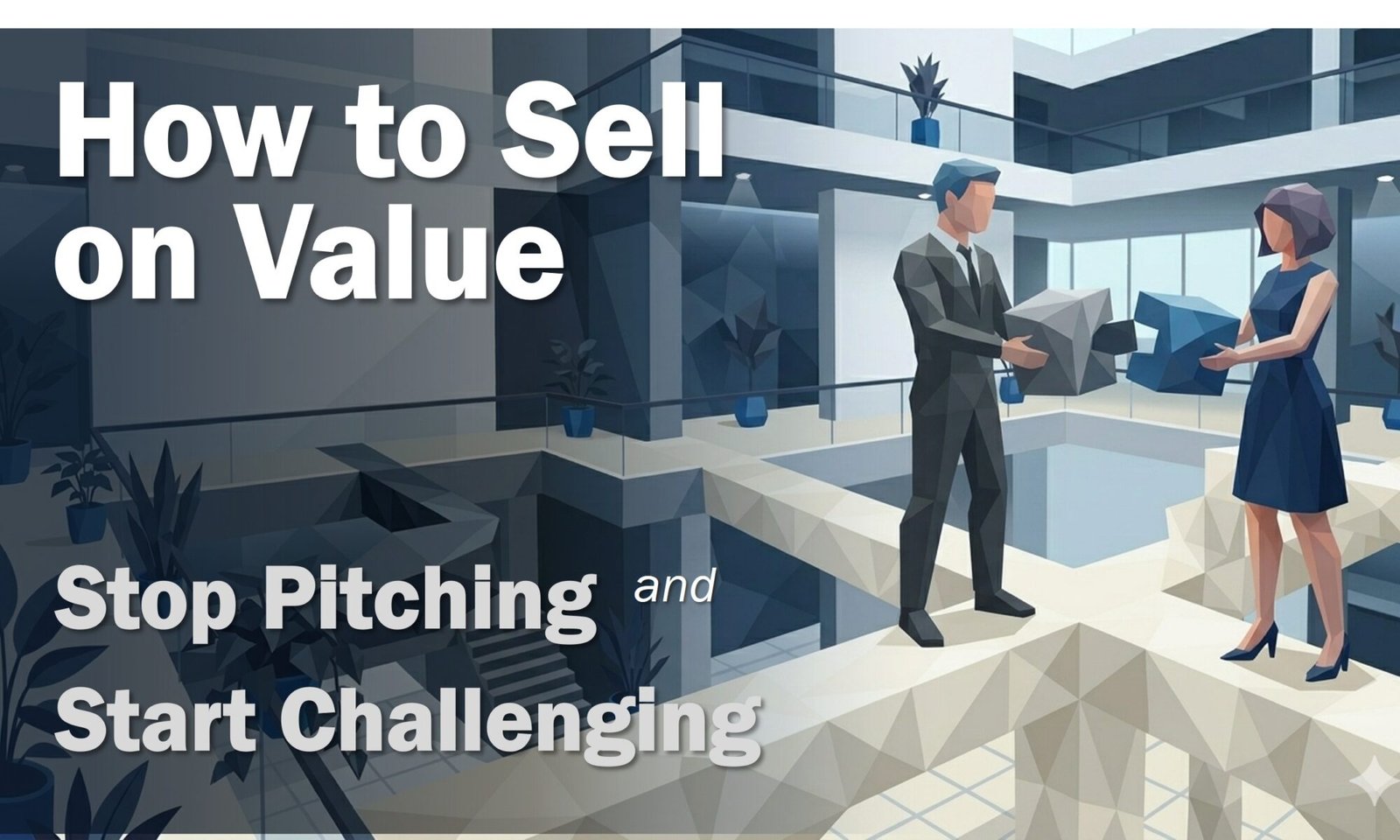
Here is the simplest way I can describe the difference between a transactional sale and a value-based one.

A sales pitch goes like this: let me tell you about our product. Here are the features. Here is why the competition is not as good. Here is the pricing. Here is the contract and services you should commit to.

A value-based conversation goes like this: let us agree on your business priorities. Let us discuss what your CEO expects from your team. This is how we can help you get there. Let us plan the milestones together. One is a presentation. The other is a joint success plan.

The difference is not just tone or sequencing. It is a fundamentally different understanding of your role. In a sales pitch, you are the seller and they are the buyer. In a value-based partnership, you are a business advisor who happens to have a solution that is relevant to their situation.

Leading with an Insight, Not with your Product

One approach to lead with an insight is what Dixon and Adamson called The Challenger Sale. The framework is based on research across thousands of B2B salespeople, found that the highest performers share a defining behavior: they teach their customers something new about their own business before they ever talk about a solution. They lead with an insight that reframes how the customer sees their situation — and often creates urgency the customer did not know they had.

Counterintuitively, the research also found that the classic relationship builder — warm, likable, focused on harmony — is the lowest performer in complex sales. Being liked is not the same as being trusted, and being trusted is not the same as being useful. The Challenger earns trust by bringing genuine insight, not by avoiding discomfort. If your opening conversation does not teach the customer something, you are probably pitching. A real insight changes how they think, not just how they feel about your product.

I saw this play out directly at Catchpoint. Most companies buying monitoring tools were thinking about the problem the way they always had — observability for their data center, their application code, their internal network. What we challenged them to see was that the internet itself had become the foundation of their business. Every application, every employee, every customer interaction now ran over a vast, distributed, and inherently fragile infrastructure that nobody owned and few were watching. We called it Internet Performance Monitoring, but the conversation we led with was not about the product. It was about a reality they were already living with but had not fully named: the internet is your new network, and you have no visibility into it.

That reframe changed the conversation. It was positioning, narrative and strategy. Instead of evaluating a monitoring tool, customers were suddenly thinking about business risk, executive accountability, and a category of problem they had underestimated. The product came last — after they believed the problem was real and significant enough to act on. That is Challenger in practice. Not a sales technique, but a genuine point of view about the customer’s world that you are willing to defend.

The Work Nobody Does

Here is what separates the salespeople who actually earn the trusted advisor title from those who merely claim it: they do the work before the meeting. They don´t show up with a product demo and a slide deck. Value-based sellers show up having done their homework.

What does that homework look like in practice? If the company is publicly traded, read their investor presentation and annual report. These documents tell you what the CEO promised the board and what the company is accountable to deliver. Read recent press releases — they tell you how the company wants to be perceived in the market. Spend time on their website understanding their products, their customers, their value chain, and their service commitments. Do research on their industry to understand what re the key problems they are trying to solve.

Then ask yourself: what do their executives care about? What is keeping the CFO up at night? What are the digital or operational bets the company has made? Where is the business exposed if something goes wrong?

This is not a research project for its own sake. The goal is to understand the business well enough to connect what you offer to what genuinely matters — in their language, using their priorities, referencing their specific situation.

When you do this well, the conversation changes completely. Instead of explaining what your product does, you are showing how it addresses a specific problem that the customer’s leadership team is already accountable for. Instead of a feature comparison, you are talking about business outcomes they are trying to achieve and risks they are trying to avoid.

How to Operationalize This Inside a Sales Team

If you are leading sales, enablement, or revenue strategy, here is how to make value-based partnering real — not just the training theme of the month that everyone forgets by the next quarter.

1. Coach to an executive standard. Run a simple test on call recordings: would an executive say these words? Are the problems described and the outcomes discussed relevant to someone at the C-suite level? If the conversation sounds like it belongs in an IT evaluation, it probably does — and it will stay there.

2. Require a business hypothesis before discovery. Before any customer conversation, sellers should be able to articulate the top business priorities relevant to an executive buyer, the key risks the business faces, the consequences if those risks go unaddressed, and the positive outcomes a solution could unlock. This is not a research assignment. It is a professional standard.

3. Teach product-last storytelling. Most sellers open with what they do — the company overview, the customer logos, the product capabilities. Value-based sellers lead with the customer’s industry and business situation, the risks and opportunities they face, and stories of how similar organizations have addressed similar problems. The product enters the conversation last, once the customer already believes the problem is real and worth solving. When you sequence it this way, the product stops being something you are trying to sell and becomes the enabler of a business outcome the customer already cares about.

4. Make the Joint Success Plan the primary deal artifact. Not the proposal, not the contract — the plan. It should include agreed outcomes, milestones, stakeholder owners, proof points, success metrics, and decision gates. Critically, it is co-authored with the customer, not delivered to them. A plan the customer helped write is one they are invested in executing.

What Happens When You Get It Right

When a sales team genuinely does this work, something shifts in the customer’s mind. The internal monologue goes something like this: these people did their homework. They took the time to understand our business. They are speaking to things my leadership team cares about. I can see why this matters. I trust them. I want to work with them.

That last line is the only outcome that scales. Products get copied. Prices get matched. Relationships — built on genuine understanding and consistent reliability — are much harder to displace.

The irony is that the salespeople who focus least on selling and most on helping their customers tend to close more deals, retain more customers, and earn larger expansions. Not because they are being strategic about it. Because they are actually useful.

Value-based selling is not a technique. It is a mindset, an orientation, a philosophy. It requires doing the work, showing up with genuine understanding, telling the story in the right order, and caring more about the customer’s outcome than about the deal.

That is hard. Most people will not do it. Which is exactly why the ones who do stand out.

The Three Horizons Framework in Action: Lessons from the EV Transition

The global auto industry is facing a difficult reset as consumer demand has grown more slowly than many automakers and suppliers projected during the post-pandemic surge. Companies invested billions in battery plants, dedicated EV platforms, and aggressive capacity expansion based on forecasts of rapid adoption, only to encounter price sensitivity, uneven charging infrastructure, higher financing costs, and consumer hesitation around range and resale value.

When the industry accelerated into electric vehicles, it didn’t fail because it misread the future. It failed because it mismanaged time.

Continue reading “The Three Horizons Framework in Action: Lessons from the EV Transition”

A Practical Guide to HD Audio for Audiophiles

Some people don’t just listen to music – they listen for it. They notice the space between instruments, the texture of a voice, the way a cymbal fades into silence.

Audiophiles are people who perceive music not as background, but as a craft, a performance, and an experience worth obsessing over. Audiophiles actively pursue the most faithful and emotionally engaging reproduction of recorded music. Are you one of them?

The problem? CD quality is not high quality

I remember when CDs first came out: they were supposed to be the epitome of music quality. Reproduction without noise, no magnetic degradation as you had with tapes, no vinyl erosion and playback issues as with LPs.

It’s not.

Then we evolved to MP3 music through Napster and iTunes. More recently, we started streaming our music from services like Spotify – and mostly assumed the quality would be there.

Continue reading “A Practical Guide to HD Audio for Audiophiles”

Creating a Category: How Catchpoint Repositioned Itself for Leadership

A little over 3 years ago I joined Catchpoint, a software company who met my criteria for my ideal job: I wanted a medium-sized company (I am not good with big company politics), that had a great product and bad marketing.

My last requirement, which was not negotiable, was that the company had to have a great leader and a good culture. I found Catchpoint to be a company with heart: a passion for customers, for what they do, and for the team that worked together to build a great company.

My Most Important Priority as a CMO

The first job was not to upscale the team, optimize demand programs, or rebuild the website, no. My most important task was to build a strategy that would help the company stand out, build awareness, and earn the business of the biggest companies in the World.

This is how, Catchpoint embarked on one of the most remarkable repositioning journeys in enterprise technology.

Continue reading “Creating a Category: How Catchpoint Repositioned Itself for Leadership”

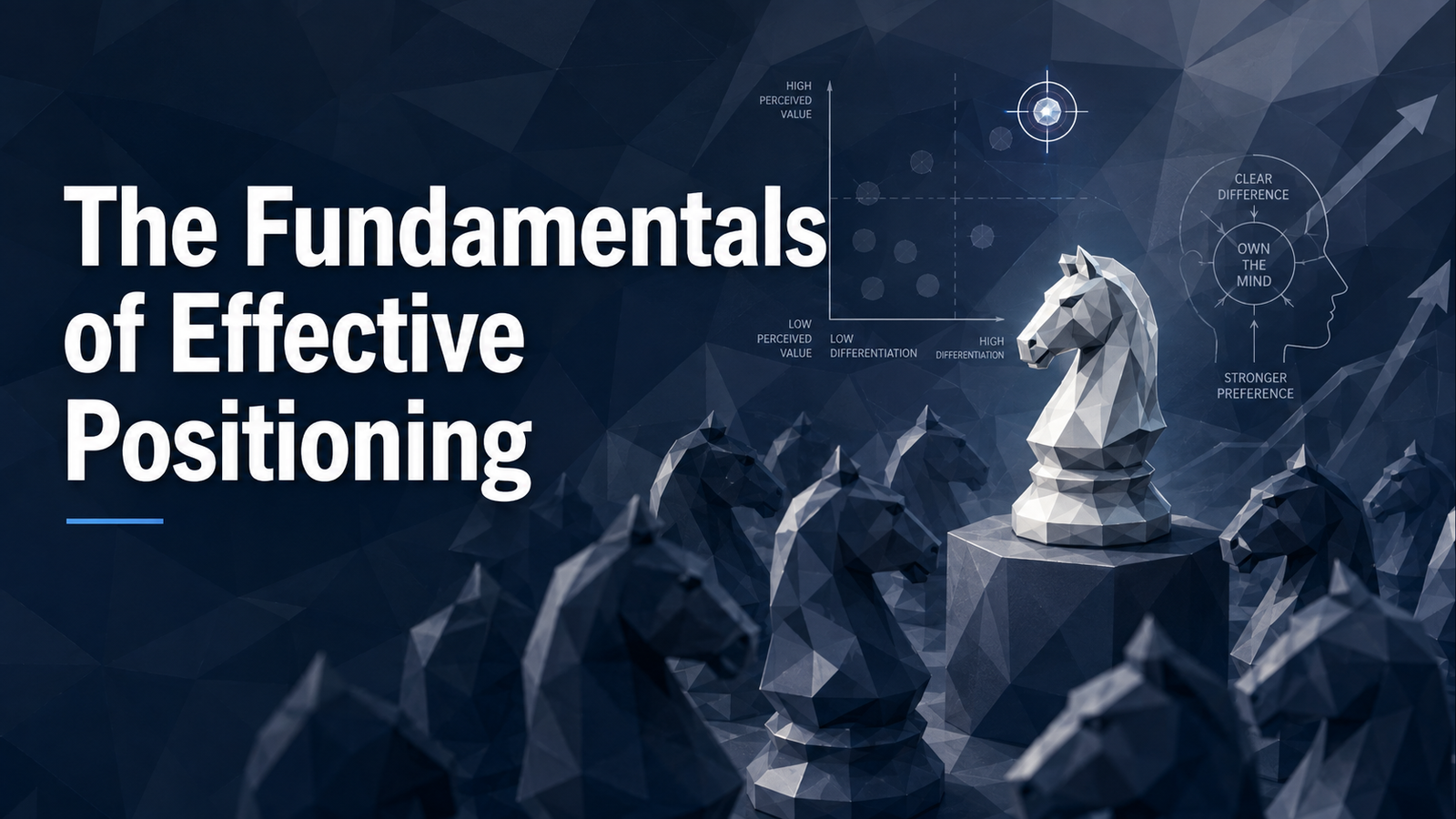
The Fundamentals of Effective Positioning

Fundamentals of Effective Positioning

Positioning is one of the most powerful — and most misused — tools in marketing. It’s not a tagline, a clever campaign, or the latest buzzword tossed around in a boardroom. Positioning is the strategic lens through which customers understand who you are, what you stand for, and why you matter.

When done well, it becomes the foundation of every message, product decision, and go-to-market motion. When done poorly, it creates confusion, weak differentiation, and a brand that feels interchangeable. Despite its importance, positioning is often treated as a quick creative exercise rather than a rigorous strategic discipline — which is why so many companies get it wrong.

In this post, I break down the eight rules that define effective positioning — the principles that separate brands that own a place in the customer’s mind from those that simply blend into the noise. Whether you’re refining an established brand or shaping a new one, these rules will give you a practical framework to sharpen your strategy and communicate with clarity and conviction.

Continue reading “The Fundamentals of Effective Positioning”

Stop the Content Machine – The Seven Deadly Sins of Content Marketing

Stop the Content Machines

Every minute, 4.5 million blog posts are published. Yet most go unread.

Content marketing started as a revolutionary idea: educate, don’t just sell. But somewhere along the way, the mission changed — from teaching to churning. The content machine took over.

When done right, inbound marketing builds trust and a steady flow of qualified opportunities especially when you are trying to educate potential customers about a new technology, a new approach, or to establish expertise. But somewhere along the way, the mission changed. What began as a way to build expertise has turned into a production race

“Content Marketing is the only marketing left.

– Seth Godin
Continue reading “Stop the Content Machine – The Seven Deadly Sins of Content Marketing”

What is Marketing according to Seth Godin

Seth is like the Swami of marketing. Or maybe the shepherd of marketing because for over two decades he has been guiding the marketing profession as it evolves and matures. Seth is the author everyone has to read, no matter what kind of marketing you do.

And it makes sense for him to write a book about what marketing is. This is Marketing is a foundational book. Unlike other books, This is Marketing is not a book focused on one central idea, instead, it covers a wide range of topics from the rationality of buyers to adoption cycles. It’s a book about the core of what marketing is all about.

It also is a book about what marketers are about. It talks about our role in the world, our responsibility to use our talent for the greater good, our ability to change the world, and the importance of doing marketing in an ethical and respectful way.

In a way, this is the book that attempts to encapsulate all of Seth Godin’s wisdom in one tome. It includes the core concepts from permission marketing, written in the 90s, and covers important topics from All Marketers are Liars, which is probably Seth’s most important book.

In this post I will cover a few tidbits of wisdom I particularly liked in Seth’s book:

What is Marketing, according to What is Marketing?

Marketing is the generous act of helping someone solve a problem. Their problem. Marketing helps others become who they seek to become”. Continue reading “What is Marketing according to Seth Godin”

Marketing Giant Interview With Rob Malcolm

This Marketing Expert Interview is with a true giant of Marketing, Rob Malcolm.

He is currently the Executive in Residence at the Center for Consumer Insight and Marketing Solutions at the McCombs Business School at the University of Texas. He has been a lecturer at the Wharton Business School, Chairman for the American Marketing Association, CMO at Diageo, and spent over 20 years at P&G.

1. What company is an example of good marketing today? Who do you admire?
Two immediately come to mind – Frito Lay and Wendys. Frito has consistently outperformed based on very sound portfolio differentiation, strong unique brand propositions and timely marketing that keep these impulse brands top of mind through culturally relevant marketing. I love Wendy’s “challenger” marketing approach that is leveraging its unique product difference in very clever comparative marketing.
Continue reading “Marketing Giant Interview With Rob Malcolm”

The Risks of Following a Blue Ocean Strategy

Blue Ocean Strategy

Adopting a Blue Ocean Strategy, pivoting to a brand-new markets without competitors, is, for many, the holy grail of corporate strategy. Who does not want to make competitors irrelevant and to in grow a vast, blue, new market uncontested? It it smooth sailing or is it too good to be true?

Pursuing a Blue Ocean strategy can be a great choice for many companies, but it is not without risks or challenges. It’s also not easy. Otherwise, every company would pursue a blue ocean. Let’s start with the definition of blue ocean and then let’s explore the challenges and risks in pursuing such a strategy. Continue reading “The Risks of Following a Blue Ocean Strategy”

Writing well is an essential business skill

Knowledge is useless unless you know how to communicate it – in writing.

We live in a world where most communication happens in 140 character messages, 7 second videos and short text messages. It’s easy to forget how important is good writing as an essential and personal skill.

I have been inspired by David Ogilvy, the father of advertising. His story is really interesting. His teachings fundamental. His books are some of the first every marketer should read. In the Unpublished David Ogilvy, I found great advice by the master.

The better you write, the higher you will go in Ogilvy and Mather. People who think well, write well.Continue reading “Writing well is an essential business skill”

Oh hi there
It’s nice to meet you.

Sign up to receive awesome content in your inbox

We don’t spam! Read our privacy policy for more info.