It’s a trick question. It assumes you can have without the other when in fact, the answer is that what is more important is the alignment between strategy and tactics:
Strategy should be based in your tactical ability to execute (which includes your core competency, as the thing you can execute on better than anyone else) and tactics should support the strategy
What is really important about this point of view is that it is not uncommon to find a disconnect between strategy an tactics in many companies:
The strategy is unclear for the teams executing, or
While the strategy is clear, how it should impact and guide tactical work for each member executing is unclear
Strategies are developed in a vacuum by executives that are not connected to the front lines, or worse, by top-dollar consulting companies that bring junior MBAs to craft a strategy with no real context of the business
Part of the problem is that there are very few people who can span both: who can think strategically but can also guide (and roll up their sleeves) to execute. Employees who can bridge strategy and tactics can add incredible value to an organization, when employed properly.
How do you do that? The first step is to take a dose of reality, we need to be self-aware of how strategic we really are. Most marketers consider themselves strategic, but do we even know what that means? Here are some questions to help you assess your strategic ability:
Do you understand the fundamental metrics of your company? Have you read the latest quarterly report and do you understand the fundamentals, and how marketing can influence the key metrics that influence shareholder value?
Do you understand how your company generates profits, cash and customers?
Do you understand the medium-term strategy for your competition? Have you reviewed their IR presentations?
Do you understand your core competency as a company? What are the things your company is really good at and which ones you should avoid?
Do you understand your customers, how they are evolving and how their needs and purchase behaviors are evolving over time? What is the gap between you and your customer expectations and what you deliver today?
Have you modeled the market and competitive landscape, using tools like Porter’s five forces or a simple SWOT model? and, if you have done this consistently, have you been able to predict market evolution?
Do you know exactly how your marketing tactics and the work you are doing today contribute to the long-term success of your company?
These questions are not perfect or comprehensive, they are a start.
I just spent 40 minutes on hold trying to talk to a TV/internet company. Chances are you have been in a similar situation where you have been waiting while you hear a recording (over and over) like the one I was hearing “Due to higher than expected call volume you have waited longer than we would have liked to. Your call is important to us”
It seems the call volume is always higher than expected. Saying this sounds like a lie. It starts eroding trust before I have spoken a word with a “customer service: representative. Dear company: If my call is important to you , why don’t you hire more people to talk to customers?
With all the talk about customer experience and loyalty, you would expect companies would know better. Especially in a space that is fairly commoditized and in decline: cable TV is probably going the way of the landline phone and movie rentals, it’s a matter of time until we get all our TV on demand.
I have four or five companies I can choose from for internet and TV service. Their service is pretty much the same. All of them offer VoIP phone, HBO, 200+ channels, HD, DVR, etc. Looking at their advertisements and promotions it looks like they are all competing on price. I asked around the office, and most of my co-workers shared stories of poor service with their current provider. It was pretty uniform. This seems to be a market where a company that focuses on service could stand out.
A great customer experience would be a good strategy to differentiate in a commodity market and to keep more paying customers. Over the last 5 years I have spent more then $7,000 with this company. Add wireless service and the average lifetime customer value is probably much higher than that. Right now I am about to cancel my service and take may business elsewhere.
If the waiting message was completely truthful it would probably say something like: “Due to our executives being unable to understand and quantify how wait times and customer experience correlate with customer loyalty and revenue, we have not hired enough staff to respond to customers in a timely manner. Your call is a cost to us, one that we try to avoid, not an opportunity to engage and satisfy customers. Thank you for waiting and keeping our costs low.”
That’s where the rubber meets the road. Over the last 10 years there has been a surge of companies who have Chief Customer Officers, customer advocates and other organizations who are tasked with transforming the organization. I was one of them – for a few years I was the SME in charge for Broad Customer Connection at a Fortune 50 company, even if it was not my full time job.
The problem is that while companies who create these teams have the best of intentions, often times the customer experience teams are not really empowered to make the transformational changes in the organization and end up doing surveys that no one reads. Even when there is a level of empowerment, when it comes down to dollars and cents it takes a real commitment to customer experience to make the hard decisions. This only happens when the people in charge fundamentally understand and believe in the financial mid and long-term benefits of customer experience.
For customer experience to be successful, it needs to drive the company strategy. From defining the culture (look at Zappos) to making financial commitments to go beyond the customer expectations. At Rackspace, for example, there are no call centers, no ‘hold’ music, and no customer service representatives. Customers wait an average of 6 seconds to talk to a technical person who will take ownership of solving their problem.
You don’t want to have a customer experience team that ends up doing stupid surveys as David Meerman points out in his latest post. Providing an acceptable customer experience is no longer optional. Building a company to deliver great customer experiences can be a source of sustainable competitive differentiation and a successful business strategy.
It is so easy for Product Marketers to be caught in the product launch cycle. It is not uncommon for product marketers to be known as “the team that launches stuff”. Even more dangerous is the mentality to forget a product one it has launched to focus on the next launch.
One of my mentors used to say that this behavior is akin to the Apollo XI taking off and having everyone in the Houston Command Center go back to the lab, as the rocket is pushing upwards and has not even left orbit. Can you imagine the astronauts? “Houston? Hello? ….Houston? ….anybody there?”. Well, that’s exactly how your product feels.
This launch-as-the-finish-line mentality is very dangerous and very prevalent in many technology companies. I saw his behavior at Microsoft, with one of the most public signs being Steven Sinofsky leaving the company on November 12th , just a few days after launching Windows 8 on Oct 25. Launch a product, claim success move to the next big thing.
Instead, we should think about launches more like modules that are being added to the space station. A product launch joins the other products in your portfolio and ultimately in the ecosystem, hopefully to help the life of your astronauts, the customers.
Astronauts cannot survive only with the latest module; they need the entire space station to survive. Similarly, your customers need the whole product – a complete solution made by multiple products, services, partner offerings, etc. Don’t lose that focus.
But here is a nugget for you to think about: every product launch increases the gap between you and your customers. What gap am I talking about? Remember how you felt when the iPhone 5 was announced? Your iPhone 4 was no longer current, you felt left behind.
I remember clearly how after we launched Visual Studio 2005, the focus moved almost immediately to Visual Studio 2008. This while most customers were on Visual Studio 2003 and millions of developers were happy with VB6. And while the team was thinking about Exchange 2013, most companies around the world were sending and receiving emails using Exchange 2003 – a 10 year gap.
It’s not the fault of product marketing that a gap exists, we want to push innovation forward which inevitably creates a gap. Just as marketers are sometimes too far ahead of customers, they tend to fall behind. A couple years ago when we moved back to Austin we were at our doctor’s office when the lady at the front asked if we could call our doctor in Redmond to get our files faxed. My daughter asked “Dad, what is a fax?”. That’s a generational gap.
As you are thinking about your next product launch, consider working beyond the launch to understand what the market will look like 12 months later. What will your customers be using? What will be their technology adoption reality? What up-sell or upgrade opportunities can you see? What about customers using older versions of competing products – are those good candidates for a targeted campaign? How will you increase customers’ satisfaction and profitability for your entire customer base?
My six recommendations to ease the gap between you and your latest product launch:
Avoid thinking of product launches as the culmination of your work, they are only a milestone
Think about product portfolios and ecosystems (whole product), that’s what customers care about
Take care of your astronauts and provide them with a safe landing with guidance, migration tools, education and support
Understand the technology adoption behavior of your customers: from early adopters to laggards
Be mindful of the gap and the reality of your customers adoption page and their urgency (or lack thereof) to upgrade
Provide bridges that make it easier for customers to upgrade to the latest version
Content Strategy and Content Marketing are some of the hottest topics in marketing today. With good reason – they are critical part of any solid marketing strategy, especially for considered purchases.
I want to summarize some of the key takeaways of the article and add a few additional thoughts.
Content Marketing is a response to changes in buying behavior: customers are doing much more reasearch before they buy and often making a decision before engaging with a company.
In this age, marketing is more about being helpful and education than broadcasting and clever headlines.
Content Marketing has been around for some time, especially in B2B – for example, white papers in technology marketing.
The most important aspect of a content marketing strategy is to be have an interesting and useful point of view. This means content must be written by subject matter experts and that content needs to be valuable and unique.
This is such a key point. As Ryo Chiba says “Great content marketing is neither spammy nor salezy. Solve a problem for your customers. Write posts that serve your audience”
A good content writer needs to be an expert. If you are not one, before you start writing start learning. Have a point of view.
Don’t lose sight of the fact that content’s main objective should be to influence buying decisions through customer education.
A content marketing pyramid is very effective at making the most of your valuable content: start with a solid white paper, turn it into a webinar or slidecast, extract interesting sections into a few blog posts, then extract nuggets into tweets.
You can track leading indicators to determine which parts of your content strategy are working. ROI measures for content generally fall under three categories:
Consumption metrics: views and downloads (especially after someone downloads a white paper after reading a blog post, for example)
Engagement metrics: shares, comments, votes, ratings and retweets
Funnel metrics: clicks from your content to the buying process on your site
Deal Influence: asking customers if they consumed any of their content and how much influence it had in earning their business
I encourage you to take a look at the original article and to share your thoughts below.
It’s hard to open a business or a technology publication these days without finding an article about the promise of Big Data. New technologies (Hadoop, Mongo, NoSQL and others) offer businesses the opportunity to analyze very large amounts of unstructured data at a scale and speed that was simply not possible just a few years ago.
The predictions are quite bold: Gartner research recently wrote “…enterprises adopting this technology to outperform competitors by 20% in every available financial metric”.
Before you embark on a big data project it is important to separate the buzz from the reality. This post explores 5 important challenges that can limit the ability of any marketer to turn the Big Data hype into insights, business value, and ultimately, increased revenue.
What is Big Data?
Big Data can be defined a group of technologies that help organizations store and process data sets that meet one of three ‘V’s:
Volume – for example, imagine Facebook’s database of users, posts and likes. Or a credit card company’s transaction log across all customers
Velocity – the speed of data generation. Both examples above also require a system that processes data very fast. All this data is being created in real-time, thousands or millions of items per minute.
Variety – what is also called ‘unstructured’ data: traditional databases operate using very well-defined schemas: name, address, credit card number, etc. Big data technologies don’t require schemas, they are more flexible in this way.
Big Data at the end of the day is a database technology. And it will not replace traditional ‘SQL’ databases, because there are things that Big Data databases cannot do, like maintaining transactional integrity, which is required for credit card payments or really any kind of business transaction. Continue reading “5 Steps to Turn Big Data Technology into Business Value”
When Microsoft announced the Surface there was a lot of expectation of the market. Since I got mine, almost every time I send an email with the signature “Sent from my Surface RT” or every time I use it in a group setting, I get asked about it – they have the market’s attention, or at least curiosity.
The device is not perfect. No device is. Even the iPad 4 has its own share of limitations and bugs. I love mine and I think it is a much more complete and usable device than the iPad. But this post is not about my opinion aout the device, which you can read here on Quora. My observation is that every Surface user I have heard from has generally the same reaction: “Compared to the Surface, the iPad is a toy.” or “Since I got my Surface, my iPad is in a drawer”. The point is not to say the device is better – every customer has to make that decision on its own. The point is that Microsoft has a real fighting chance.
The device launched just in time for the Holiday season. It still did OK, in my opinion, selling a million units in its launch month against 14 million units sold by Apple. Yet the opporuntity was much larger. The problem (or a problem) is that a 32Gb iPad costs exactly the same, $499. This forces buyers to make a concious decision of buying the Surface versus the iPad. Here is the opportunity:
What would have happened it Microsoft had launched the Surface at a price of $275?
There would be no comparison against an iPad at $499. It would make the competitive decision much easier for customers who were not already sold on iPad. A large chunk of the market made of people who don’t want to spend $499 for a tablet wuld probably jump in. It would be a no-brainer compared to a 16Gb iPad mini at $329.
At $275. the Surface would certainly be a better buy than the Kindle HD, which sells for $299, and was selling at a rate of a million units per week at the peak of the holiday season.
The economics make sense
The cost to manufacture a Surface RT with 32Gb of memory, according to iSupply, is $271. Let’s assume Microsoft sells 5 million Surfaces instead of one million, just for the sake of the conversation. If we take $224. of profit from each of these four million units, that would have decreased $896 million in profits for Microsoft.But in reality it only sold a million, so te actual los in profits would only be $224 million.
That would have taken its operating income from $7.77 billion for Q3 2012 to ‘only’ $7.55 billion. hardly a dent, and well above the $6.6B from the same quarter last year. More importantly, it would have added $1.1 billion in extra revenue to bring the quarter from $21.46B to $22.56B, avoiding a miss of expectations (see stock price for the impact of that).
My point: reducing the price of the Surface to $275. would have had virtually no impact to profits and would have had a large impact on revenue. Microsoft could have opted to make this a promotional, limited-time offer, creating a sense of urgency for consumers.
Even at the $275. price, Microsoft would have a profit opportunity in the lucrative accesories market. An installed base of millions of devices creates a large opporutnity to sell keyboards, cases, mice, applications and other accesories. they could have charged a nominal monthly fee for Office.
Microsoft’s opportunity to earn a solid footing in the post-PC era is surely worth more than a 3.5% decrease in profits.
Besides the neglible impact to profits, the only other downside I can think of is the impact to OEM partners. This is an important point, but one on which Microsoft should have decided on when they decided to enter the hardware business. Would Acer and Dell be upset our would they have been thankful for the creation of a market, acceleration of the application base and pressure to be more competitive?. Yet, the upside for Microsoft could be very big:
$1.1 Billion in increased revenue for the quarter, bringing revenue not only in line with expectations, but probably exceeding it.
Creating a product line with $4 Billion in revenue, esentially overnigt would be an incredible business success by any measure.
The stock is near the bottom of its 52 month range at $27.55 as I write this. I can’ speculate the actual impact to the stock price, but I think it is reasonably to expect a jump if microsoft had sold 5 million Surfaces. Every dollar increase in stock price creates $8.3 billion in stockhohlder value. The stock has hovered around $30 for a decade despite very large increases in sale and profits. You could argue an event like this could generate positive momentum.
Microsoft would have earned significant economies of scale, bringng the costs down for them and OEM partners, providing a long-term economic advantage.
It would have eliminated any doubts of the consumer adoption of Windows 8 which would have lifted the entire ecosytem incluidng sales of Windows Phone and PCs, resulting in a benefit to OEM and accelerated porting of applciations to Windows 8. Maybe we would have Instagram on Win 8 by now.
Apple would have sold less iPads. Let’s assume out of the 4 million incremental units two come from would-be Apple buyers. Microsoft is a very competitive company, this would not be an insignificant win.
Imagine the impact of the news “Apple sells only 12 million iPads in Q4, Microsoft sells 5 million in its first quarter”. The brand, PR, employee morale and talent acquisition value of this statement is woth much more then a 3.5% decrease in profits. Imagine the Businesweek cover story “Microsoft is Back”.
When Microsoft priced the Surface at $499 I was very suprised, knowing Steve Ballmer is hyper competitive and a long-term thinker that has demonstrated a discipline to invest in markets for the long term. Microsoft has a lot of smart people, I am sure they spent considerable energy in their pricing startegy.
I believe the Surface will be successful anyway. The 128Gb Pro model sold out in hours. A million units in their first quarter is not bad, even compared to the iPad’s 3.3 million in its first quarter. But I can’t avoid thinking of what could have happened with a more agressive pricing strategy. We probably would be in an alternative future. your thoughts?
For the record, I admire Steve Jobs and Apple and have blogged about it a couple times.
Disclosure: I worked for Microsoft from 2004 to 2008, I am no longer affiliated with the company but still own some stock. As with all post in this blog, this post reflects my personal opinion. I own a Dell PC, a Surface, a Lumia 920 and a Zune. We have an iPhone, multiple iPods and an iPad at home. I have used Macs since the 1980s and sold a few of them when I was in the digital imaging business.
What does coffee and love have to do with growing a business?
Let me start with a story. Hang on. It has an important message for marketers and businesspeople.
Get customers to love you like I love Coffee
Yesterday, my friend Roxanne made fun of me claiming to be a ‘coffee connoisseur’ on my twitter profile. I didn’t mean to brag about my expertise, I really meant to say I love coffee, good coffee. But just a few years ago I did not drink coffee at all. What happened?15 years back I lived in Mexico. NAFTA was in vogue and I was an entrepreneur (now I am an intrapreneur – an entrepreneur inside a a company) looking to expand my business. I visited a cousin in Xalapa, a beautiful town in the mountains with perfect weather for growing coffee. My cousin had a plantation and told me about his coffee business. I was intrigued.
I went to Inc. magazine’s forum and wrote a post looking for a business partner. Someone who would be interested in exploring the idea of exporting coffee to the US. That’s how I met my friend Fernando Labastida who loves coffee and had the entrepreneurial bug. A few weeks later I arrived in Austin. Fernando took me to a coffee roaster where we learned about the roasting process and to coffee houses from Mozart’s on the Lake to Ruta Maya to the famous Captain Quackenbush’s Intergalactic Dessert Company and Espresso Cafe.
After learning about the craft of growing, sorting and drying coffee with my cousin in Xalapa, then learning about the delicate art of roasting coffee in Austin, visiting the multiple coffee shops in Austin and thinking about the potential business, I was hooked.
Although I was not a coffee drinker just a few weeks back I had learned the proper way to taste coffee. I learned about acidity, caramelization, the importance of roasting beans of even size, the difference of roasting in a pan versus using hot air, the chemical processes that occur when roasting, grinding and brewing coffee. I became a connoisseur. And I fell in love.
At the end, we did not start a coffee import business for various reasons, one of them being the required scale of investment to make the economics work. However, I ended up with a great friendship and a passion for good coffee. And I learned one important marketing lesson:
You can’t love what you don’t know.
(and neither can your customers)
You cannot fall in love with your sweetheart before you meet her. A preacher once told me it was important to read the bible, because you can’t love Jesus unless you know him. Your customers cannot fall in love with your products, your brand, your company without getting to know it. What should marketers do about this? Three things come to mind.
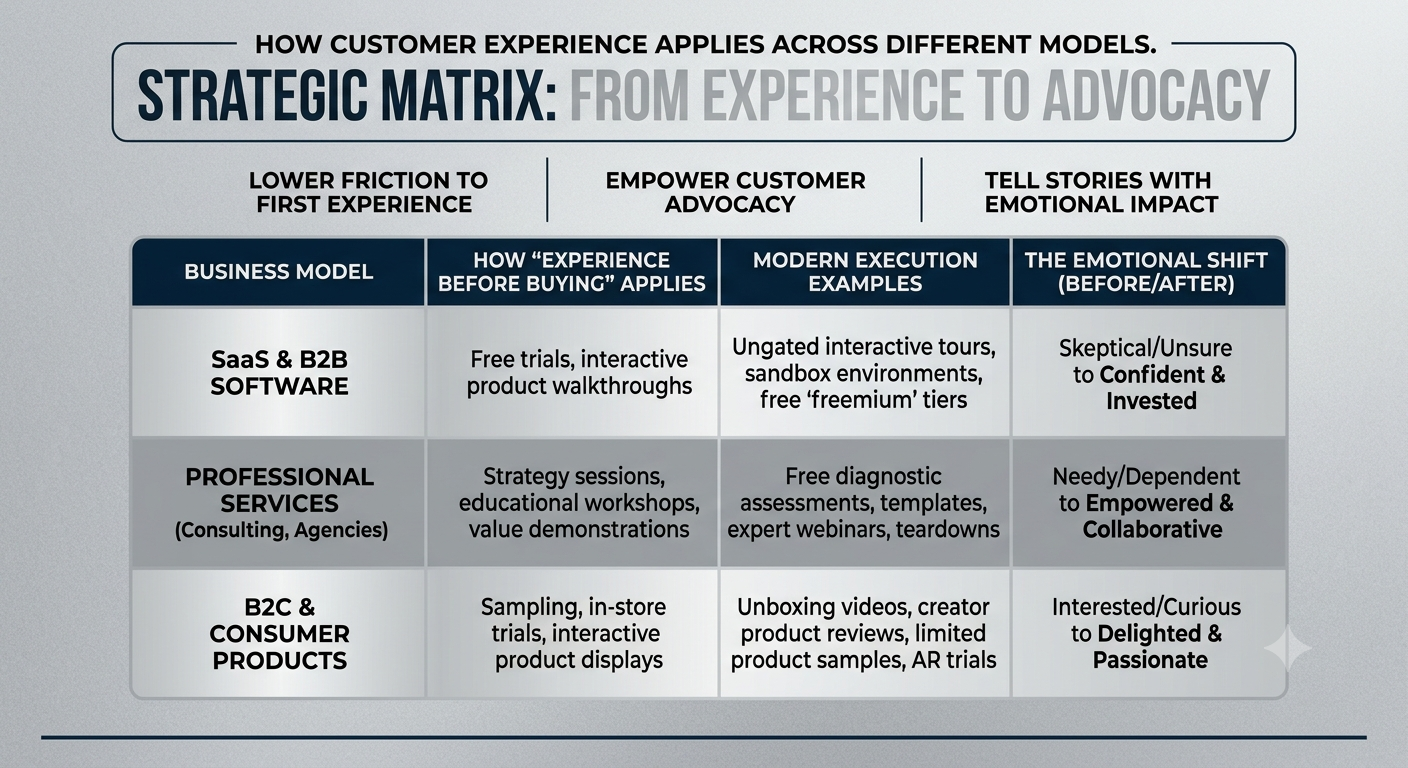
Enable customers to try your product. If you sell food, offer free samples. If you sell software promote free trials. What if you are in the professional services business? Your product is your knowledge, let customers sample it too by offering free advice or workshops, free articles or white papers.
Get customers who try and love your product to share their love. Social media is the easiest way to do this. Let this be your guiding principle for your Facebook strategy. Enable customer reviews, and embrace them (the good and the bad, you can learn a lot from what your customers say). Add social sharing buttons to your website and your blog. Hand out extra business cards to your satisfied customers. Ask them in person to recommend you to friends.
Make it easy for customers to experience your product without using it. Make them feel like they are using your product. This can be done via technology like 3D video maybe but it can be much simpler: you can do it via narrative. Instead of talking about features and benefits, tell customers about how they will feel when (or after) they use your product. If you sell a convertible let your prospects imagine the feeling of the wind in their face, the openess of the road and the warmth of the sun.
The fundamental idea is that knowledge creates a connection. Knowledge can create love (if your product is good). Even more important, knowledge is a prerequisite of love. If your customers learn about your business primarily via your website, how much knowledge are you sharing? How many interesting stories do you share? How do you talk about your people and your unique way of doing business so that people can identify with you?
Let your customers love you, by telling them more about you and letting them experience your product before they buy.
Applying this principle to different kinds of businesses
The “Coffee Principle” of customer experience isn’t limited to a specific market; it’s a universal psychological driver of affinity. To cultivate deep customer connection and bypass loyalty-eroding shortcuts, organizations across the B2B and B2C spectrum must adapt their strategies for “experience before buying” to match the nuances of their customer journeys. The matrix below contrasts how the core principle of low-friction experiential education can be modernized across traditional and digital sectors to turn cold prospects into advocates.
Before You Pitch the Solution, Reframe the Problem
Most customers don’t actively seek out new solutions because they have adapted to their current pain points. They accept inefficient processes, subpar quality, or lingering friction simply because they do not know a better reality exists.
Trying to pitch a product to a customer who doesn’t realize they have a problem—or who misdiagnoses the cause—is like trying to describe a fine espresso roast to someone who thinks all coffee is supposed to taste burnt.
Before you can convince prospects that your solution is superior, you must first educate them on why their current baseline is broken.
1. Uncover the Hidden Friction
Growth-stage marketing isn’t about shouting product features; it is about diagnosing hidden inefficiencies. Shift your content away from what your product does and toward exposing the cost of the status quo.
The Traditional Approach: “Our platform automates workflow management in three clicks.”
The Thought Leadership Approach: “Teams spend 40% of their productive energy managing work rather than doing it. Here is why task coordination is draining your velocity.”
2. Introduce a New Mental Model
To teach customers a new way to see the problem, you need to provide a new framework or vocabulary. When you give market problems a clear name, structure, and cause, you establish your brand as the definitive authority.
Shift from Symptoms to Root Causes: Help your audience understand why the issue occurs rather than just acknowledging that it feels uncomfortable.
Provide an Analytical Lens: Use industry benchmarks, diagnostic tools, or visual frameworks to show prospects where they fall on the maturity curve. Once a customer views their challenge through your framework, your solution becomes the logical, inevitable next step.
3. Lead with Category Education, Not Product Promotion
When you focus on educating the market, you transition from a vendor selling a tool to a trusted advisor guiding a transformation.
Unguided Education: Publish actionable teardowns, industry insights, and educational guides without demanding immediate purchasing decisions.
Value Before Friction: Give away your best strategic frameworks for free. When prospects learn how to evaluate their problem from your content, they will naturally trust your product to solve it.
By reframing the problem first, you create a market that actively seeks your perspective. Customer love isn’t built on a sales pitch—it’s built on the clarity you provide before a transaction ever takes place.
Audit your customer journey today: Where are you asking prospects to commit before they truly understand what you do?
Fix that single friction point, and watch customer affinity follow.
Successful companies must be able to evolve at the speed of change.
Companies that don’t adapt to the changing world disappear quickly: Blockbuster is a prime example; today we are witnessing RIM (who makes Blackberries) following similar steps.
Technology is the disruptor: cloud computing is empowering entrepreneurs and businesses with computing power that was inconceivable just a few years ago. Mobile devices are making information ubiquitous. Social technologies are enabling sharing of ideas and knowledge in real time. As a result, today’s customer is very different from that of 10 years ago:
Smart – Buyers are armed with knowledge. More than half of all online purchases are influenced by online research.
Connected – Customers have the ability to research, share, comment and buy anywhere, anytime. The ability for customers to compare online and nearby prices while in a retail store is forcing unprecedented price transparency.
Socially Influenced -The new buyer is not alone. He or she is empowered and influenced by the collective knowledge of friends, influencers and online reviewers.
It is all to easy to react tactically to the latest trend or to go for the new buzzword. Only a few years ago companies were racing to build facebook marketing and f-commerce plans, today everyone is talking about how to build a Social Business. Instead marketers should think about Customer Interaction Strategies, and understand how the new tools (Pinterest, Twitter or whatever comes next) support your business strategy.
The new Dynamic Customer Journey, as the Altimeter Group calls it, forces marketing leaders to build a dynamic, adaptive marketing team and to lead the company in its pursuit of being an adaptive organization. Their focus on these two themes is what inspired this post.
This need to continuously evolve and adapt as marketers is the reason why In February 2011 I renamed my blog The Adaptive Marketer. In that post I shared this quote from management guru Peter Drucker, who back in 1968 in The Age of Discontinuity wrote:
“Businessmen will have to learn to build and manage an innovative organization. They will have to learn to build and manage a human group that is capable of anticipating the new, capable of converting its vision into technology, products and process, and willing and able to accept the new.”
How to build an adaptive marketing organization? I don’t have the complete answer, but I can share a few ideas:
Don’t get blinded by shiny objects: Web 2.0, Pinterest, Twitter, Facebook, Google + and the new tools that will appear in the near future, are just that: tools. Think of them in the context of how they can affect your customer engagement strategy and how do they support your business objectives.
Hire multidisciplinary marketers: Don’t hire a Pinterest expert or a Twitter guru. To be adaptive, your team must understand multiple marketing tools and tactics and how they interact with each other. Else, you end up with siloed, tactical activities. As an example, your twitter tactics can support your content marketing strategy which can combined can support your lead generation and revenue goals. Hire marketers that understand how all the pieces work together, and who can understand new tools fit this framework as they are invented.
Build a continuously learning organization. Change is hard. It took us years to begin to understand the internet affected businesses. Then we had to learn about SEO. Next was social media. Content marketing is important again (it has always been). The only constant is change. Build learning into your organization’s DNA. Hire curious people. Encourage experimentation. Build a training plan. Stay up to date.
Keep the customer at the center – Amidst all this change, there is one constant: the customer. While the interaction tools and the buying behavior are constantly evolving, customers should stay at the center of your strategy. The first step is to really understand who is (or should be) your customer, understand what they need and how they need it (including how they want to buy) and design your selling process around the customer experience.
Focus – it is all about the business. Marketers must be increasingly accountable for results. Not only leading indicators like website visitors or facebook followers – actual results. I am talking revenue growth, increase in customer lifetime value, customer satisfaction, loyalty and advocacy. This is what I mean: if you build great products that your customers love, you will probably do alright.
Here we go again – we have a new buzzword, all the social media experts are talking about the “Social Business”
Peter Kim defines social business [link http://www.beingpeterkim.com/2012/03/what-matters-in-social-business.html ] as “a social business harnesses fundamental tendencies in human behavior via emerging technology to improve strategic and tactical outcomes” – interesting but it sounds like something a consultant would say. IBM defines it as an agile, transparent and engaged organization (of course, they sell collaboration, community and social listening tools).
I don’t think it is that complicated. What does it mean to be a social business? To me, it is not about having a team of people monitoring Linkedin, Twitter and, if you are in the ‘leading edge’, Google+ and Pinterest. Those are tools, communication channels.
Photo courtesy of Tobym http://www.flickr.com/photos/48089670@N00/with/66419210/ under the Creative Commons license
What it means to be a social business can’t be relegated to a small rapid-response, crisis-prevention team. The social strategist should be a customer interaction strategist, not the leader of a support team that is trying to move quickly to avert a Comcast-like crisis or a United breaks guitars viral video incident. There is no formula to make content viral either.
To me, running a social business has a much deeper meaning. I say ‘deeper’ because it requires a fundamental culture change that spreads across the business and changes the way the business operates.
Social Business is about being sincerely interested in listening to customers and empowering employees to have an open conversation with them.
What do I mean? On one side Marketing is paying (struggling) to reach to customers to tell the company message while ‘customer service’ is trying to reduce call volume- that is, trying to talk less to customers. Does that make sense to you?
Is your Business sincerely interested in listening to customers and empowering employees to have an open conversation with them? To help you find out, here is a short Social Business test
You are not a social business if you leave people on hold for 30 minutes. If you do that, the message to customers is ‘we don’t want to talk to you’. I am proud to work at Rackspace where on average it takes customers 6 seconds to connect with a person who cares.
You are not a social business if the emails you send to customers come from ‘do not reply’. Think about it: you are talking to customers and telling them, “Please don’t even try to talk to us, we don’t care, your email won’t even make it”.
You are not a social business if you don’t publish your contact information on your site and encourage customers to contact you. How many times have you as a customer navigated nests of pages to try to find an email or 800 number? How many buttons does it take in your phone system for a customer to speak with a human?
You are not a social business if you don’t have a formal customer feedback process, that gives the team designing products and services the opportunity to understand what customers want. A system that makes it easy for front-line customers to pass feedback, makes it easy for customers to volunteer feedback, a system that collects and summarizes it, and a product development team that reads the summaries and acts on it.
You are not a social business if at least everyone in marketing spends time with customers every week. When I was responsible for social strategy for a F500 company back in 2004, every single employee in a division of many thousands was required to spend at least 4 hours interacting with our customer community. Ask your team, when was the last time they spoke with a customer (and listened)?
You are not a social business if you don’t empower front-line empowers to help customers. If you don’t allow them to have an honest conversation with customers.
You are not a social business if you speak to customers in a different language: you can’t connect with customers if you talk to them in consultant-speak, corporate-speak or marketing-speak (I am trying, it is hard). Talk to people like people, like you would if you were having a conversation between two humans (you are).
You don’t have a social business if your social media team spends most of their time fixing customer problems via Twitter and broadcasting self-centered communications and discounts via Facebook.
To drive the point home, you can have a social business even if you don’t have a social media team and if you don’t have a Twitter account. Think about the small business that talks to customers every day, where employees know customers on a first-name basis and not only know about customer’s personal lives but they actually care about them. Everyone in the business understands what customers want, and there is a relationship with customers that goes beyond transactions. To me, that’s a social business.
Twitter, Facebook and Google+ are only tools to interact with customers. They are awesome tools that have incredible potential to transform your business and the relationship with customers. But you may want to start by simply answering the phone and talking to customers.
Update: based on the comments I received to the MarketingProfs post, I want to add that I am not against the philosophy aof social business as expressed in the social media and collaboration circles. I am a fan of Peter Kim and many of the contributions from the Dachis Group. In fact, I have been an advocate of taking advantage of social media for almost a decade as well as empowering employees with enterprise social collaboration (now thwe Enterprise 2.0 conference calls itself the Social Business conference – how quickly buzzwords evolve).
The key point I am trying to make is that we marketers are too quick to chase the shiny object and pursue ‘advanced’ marketing technique when we have not really though about the basics. Markeitng is common sense. Becoming a social business is part of a business strategy that is centered around empowering employees to share knowledge and a personal interactionw ith customers, it is not about a set of ‘social media’ tools that a company can license.
Like I said in my last post, I am not a fan of Apple products. I have a Windows Phone, I love my Zune, and a month after I joined Rackspace I retuned my MacBook Pro to the IT department to get a Dell Windows 7 laptop. I have worked with Apple products for many years, I sold many Macs when I was in the digital imaging business in the early 90s and here are iPods, an iPhone and an iPad in our household.
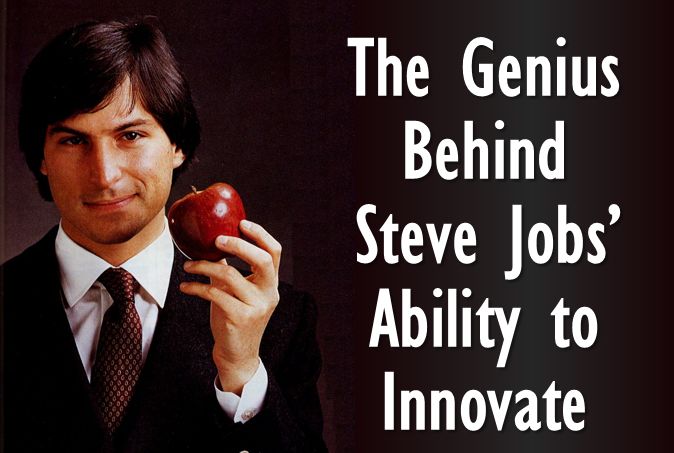
Yet, as a marketer and a business man it would be foolish not to recognize the unique ability in Steve Jobs to transform industries: personal computers, music, cell phones, animated movies and publishing. Steve also had his share of failures : The Apple Lisa, hiring John Sculley, NeXT, Apple TV (so far), Ping FM, and others.
You have probable read a dozen ‘Leadership lessons from Steve Jobs’ articles, but I have a slightly different perspective that I want to share. These are the three reasons Steve had an incredible ability innovate, according to the Adaptive Marketer:
1. Steve clearly understood customer needs
Apple is famous for not doing traditional customer research . A few days ago Guy Kawasaki came to Rackspace and told a group of us at Rackspace “the day you see Apple doing a focus group is the day you must short your stock”. It is easy to come to the conclusion that Steve ignored customers creating customers on his own.
It is true Apple does not do customer focus groups, there is no feedback section on the website and after 5 years there is only one iPhone form factor despite customers who have asked for a physical keyboard, larger screens or a smaller, lower-cost version.
But there is a difference between not accepting direct customer feedback and not understanding customer needs. Steve was frustrated with the user experience in the first iTunes-enabled phone, the ROKR. Steve understood customer’s frustration with smart phones in general. He understood customer needs, and used his technology and user experience genius to create products that served those needs.
In fact, Steve Jobs’ first press quote, published in the July 1976 issue of Interface magazine read “If we can rap about their needs, feelings and motivations, we can respond appropriately by giving them what they want.” referring to his customers for the Apple I, hobbyists.
2. He understood it success is not a result of having the best technology, but in offering the best user experience.
This ability is especially important in the technology industry where most product managers, marketers and executives are fixated on the virtues of the latest technologies that we often miss or misunderstand customer needs. Steve was a geek at heart, but he also deeply understood the importance of customer experience.
Probably as important, he understood the power of simplicity. If you look at his product launch keynotes (and if you are a marketer you must), the message was concrete and simple to understand.
In 2005 when he launched the iPhone, he did not have slides with a hundred features, technologies and capabilities. Instead, the iPhone was presented as a phone, a music player and a browser: three concepts that everyone understood. He did not talk about how many megapixels in the camera, how many megahertz in the processor, or the details behind multi touch technology. It was simply a phone, a music player and a browser.
In terms of technology, there was nothing revolutionary in the iPhone. The Windows Mobile phones available in 2005 could do everything an iPhone could do. But Windows Mobile was not simple. The best technology does not always win. Otherwise we would all be using Amiga computers.
3. Steve was relentless in making his dreams a reality.
In a previous post, I summarized Marcus Buckingham’s perspective on leadership: Great leaders are restless for change, impatient for progress and deeply dissatisfied with the status quo. The possibility of a better future burns them and propels them. Great leaders see the future so vividly they have no choice but to do everything in their power to make this future real.
Steve really was an example of this. When the iPhone was announced, there was no market for $599 phones. There were only a handful of phones that were so expensive. If you worked at Motorola, for example, and proposed launching a $599 phone, the response would be that market research showed there were not enough buyers willing to pay so much for a phone, especially a phone that did nothing new.
“Apple iPhone will fail….The iPhone is nothing more than a luxury bauble that will appeal to a few gadget freaks. In terms of its impact on the industry, the iPhone is less relevant.” – said Mathew Lynn, from Blomberg in2007
Yet, Steve said Apple would sell 10 million phones in the first 18 months. And he did.
There was no market for iPads, either. Tablets had been available for years. Microsoft issued me a Toshiba tablet when I joined in 2004, which was interesting but I used mostly as a normal PC. When the iPad was launched people were confused about the use case. Why would anyone need one? Seemed like a cool toy for people with a couple hundred bucks laying around.
As my friend John Smolucha points out in a recent blog post: “Even more impressive, nearly 75% of Apple’s revenues come from just two products: the iPhone (53%) and the iPad (20%). The first iPhones began shipping in June 2007 and the iPad only became available a year ago, on April 3, 2010. I don’t know about you, but I’m not aware of any other company that generates nearly 75% of its revenue from products that didn’t exist five years ago, while doing it during a global economic downturn.”
Steve believed in his dreams beyond what rationality, beyond market research, beyond corporate practices and policies. He had a vision and worked tirelessly to make it a reality. Yes, he was a micromanager, but only because he was a perfectionist and did not accept any deviations from his dreams.




 What would have happened it Microsoft had launched the Surface at a price of $275?